After 4 nights in Johannesburg, we continued to Addo, off the Sunshine Coast in the south. We wanted to go see elephants at the national park.
Traveling to Addo
On Thursday, after grabbing a surprisingly cheap coffee and sausage roll for 14 Rand, we had nothing else left to do so we just headed out to the airport to kill time in the lounge for our 1pm flght. This time we took a taxi. I was surprised to see no traffic craziness nor a dedicated taxi area. The driver just casually pulled up by the 10 parking spots in our section of the terminal, right in front of the airline desks. After we pulled out our luggage and were about to go on our way, another taxi came in in a rush and rear-ended our taxi. Our driver got very upset and yelled with a slight eastern european accent. I told them we are sorry to see that happen, and I gave him my contact information in case he needed it for the paperwork.
The flight to Gqeberha (formerly Port Elizabeth) was pretty short. We pickup up our rental car, got groceries at the supermarket, and drove to Addo.
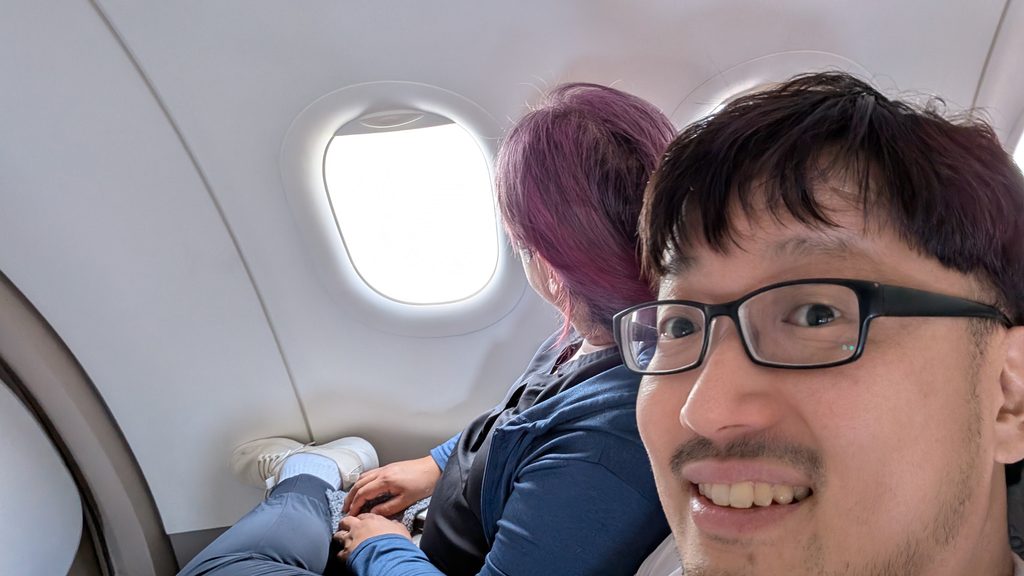
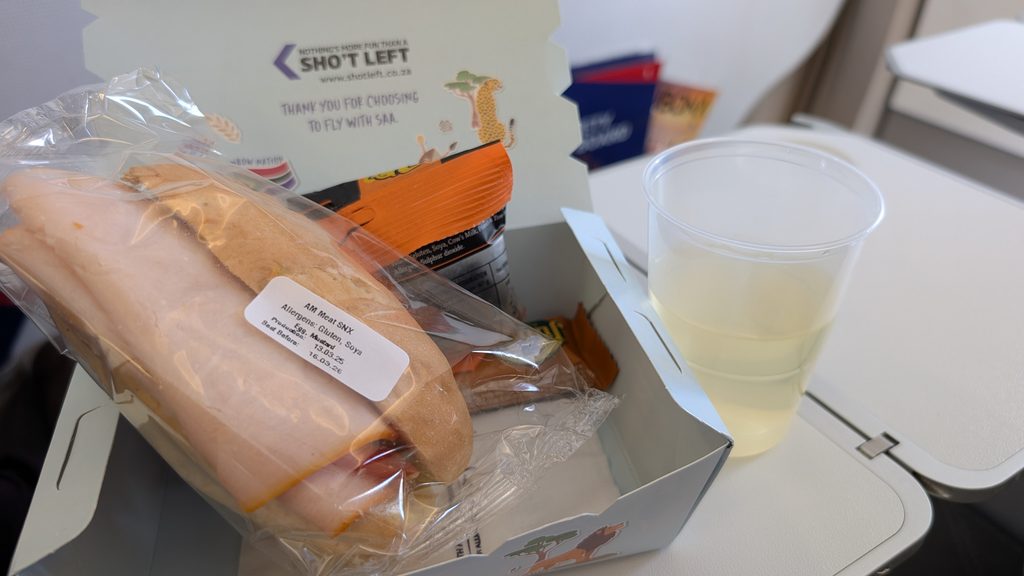
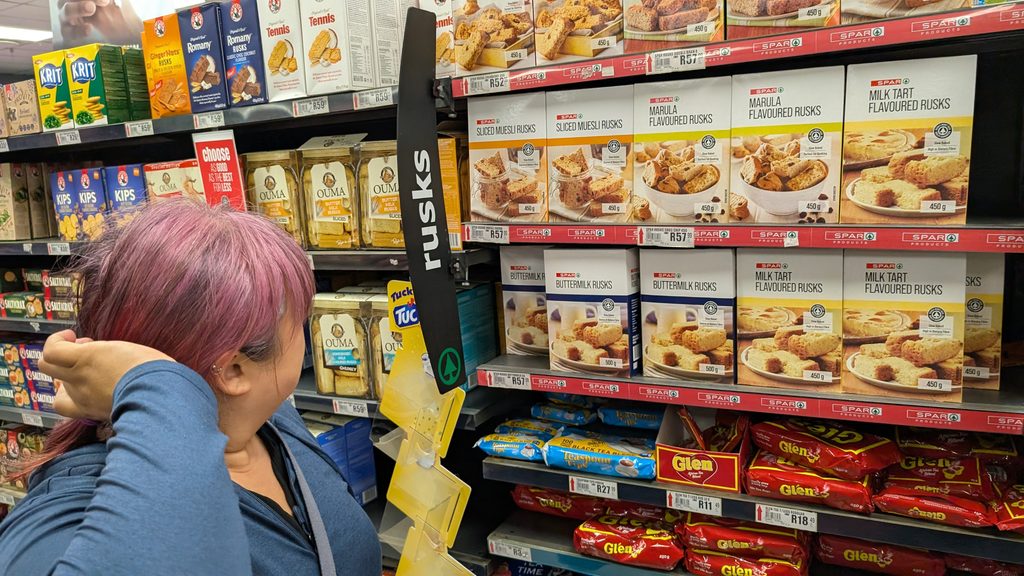
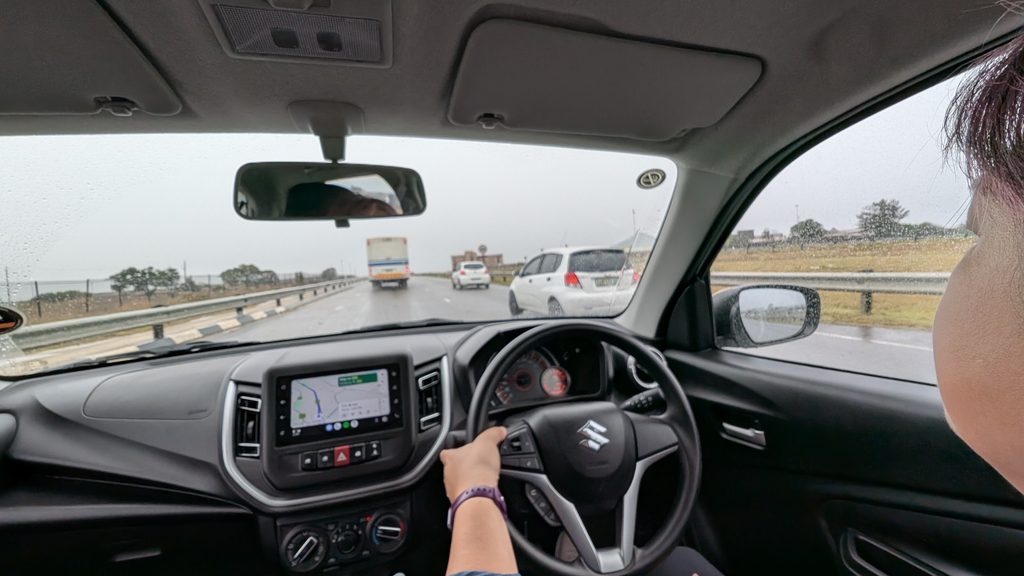
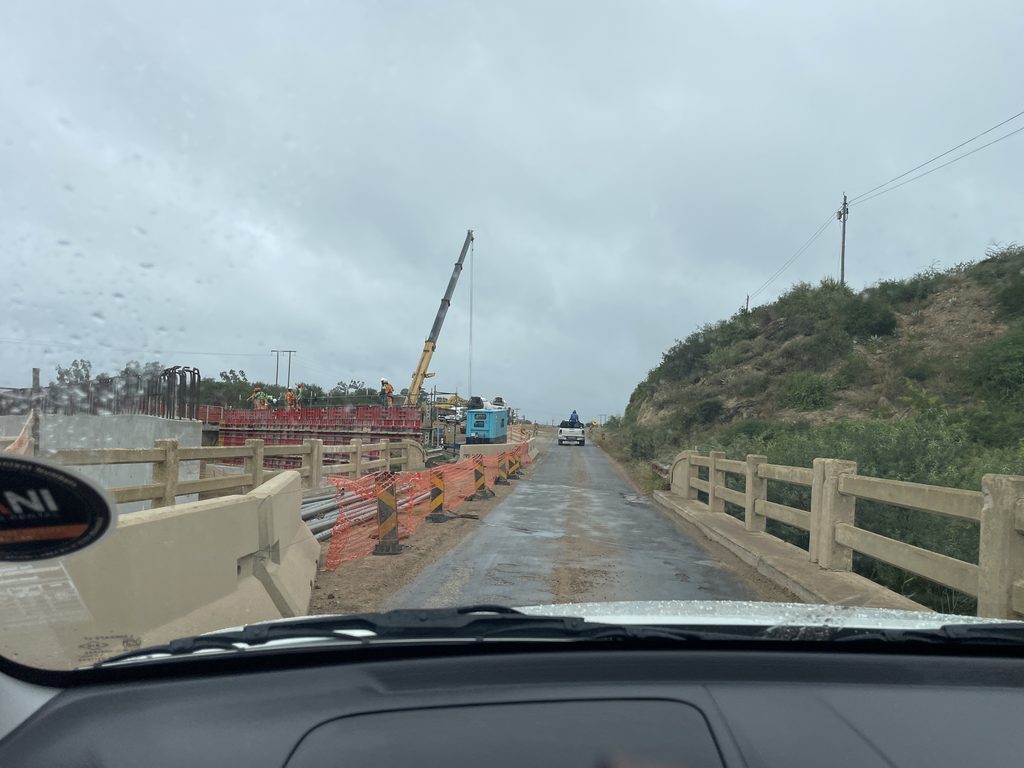
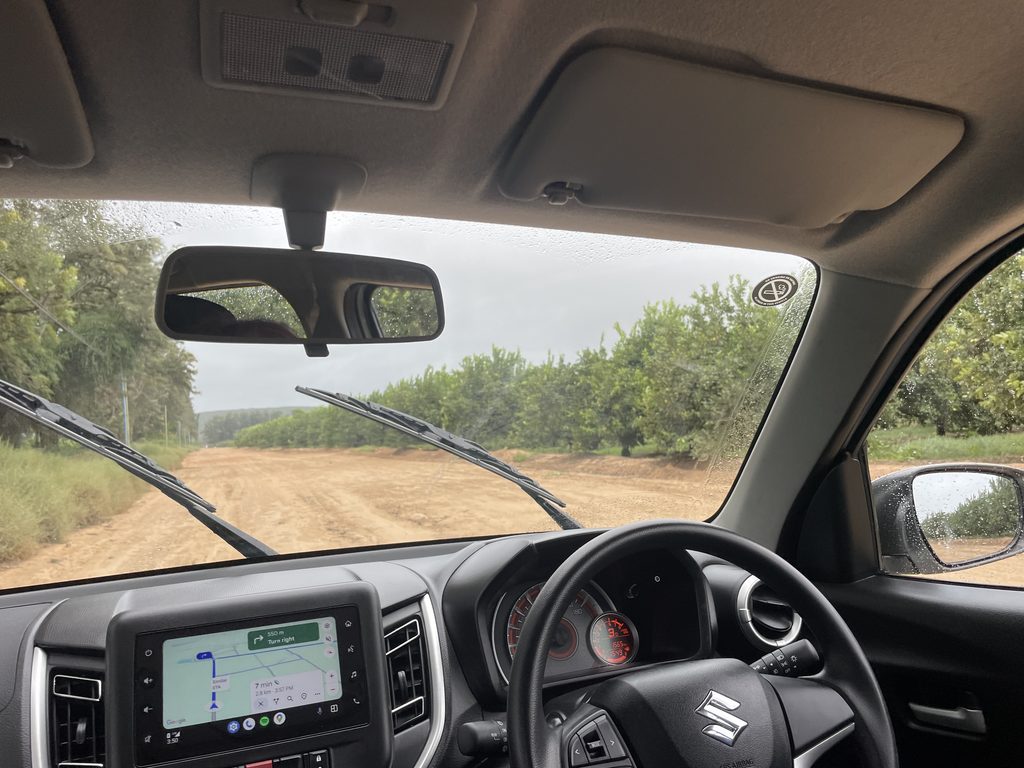
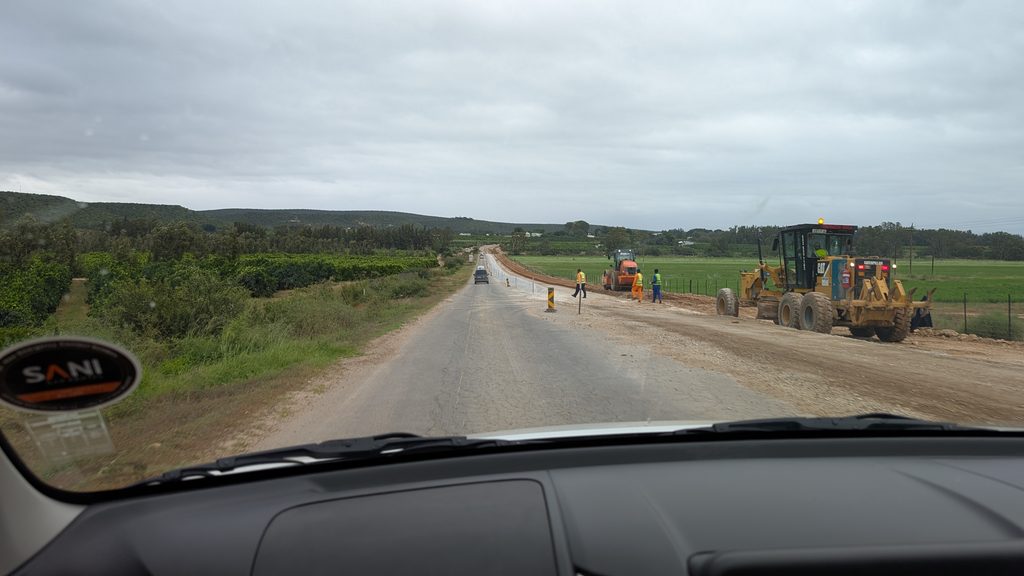
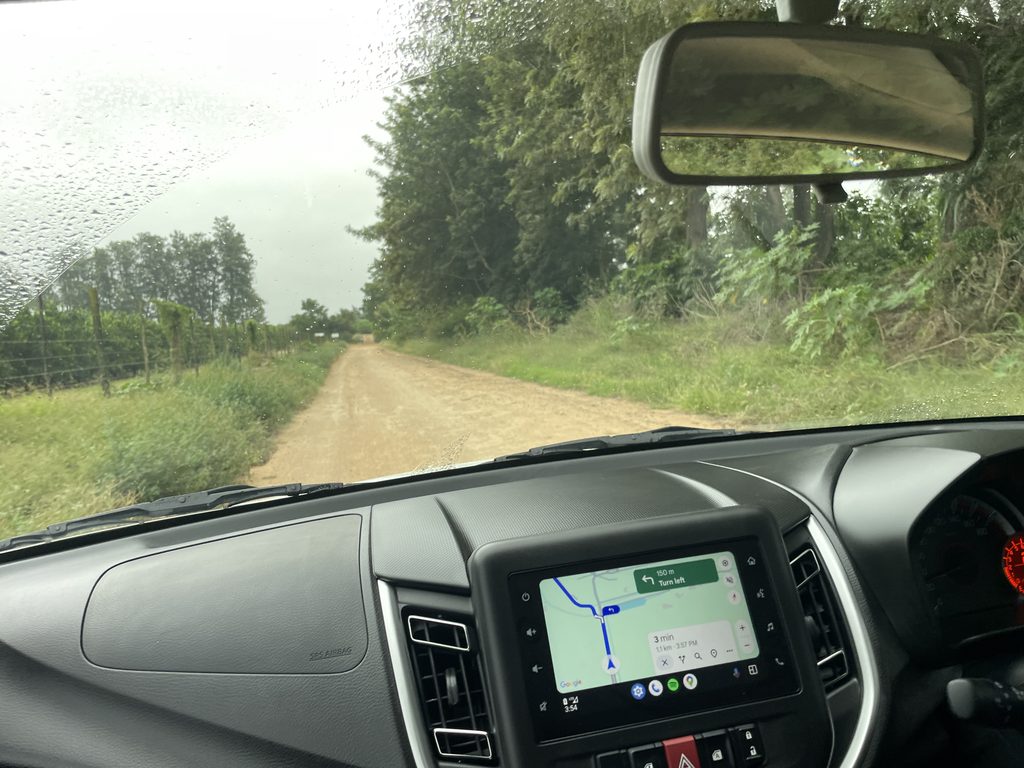
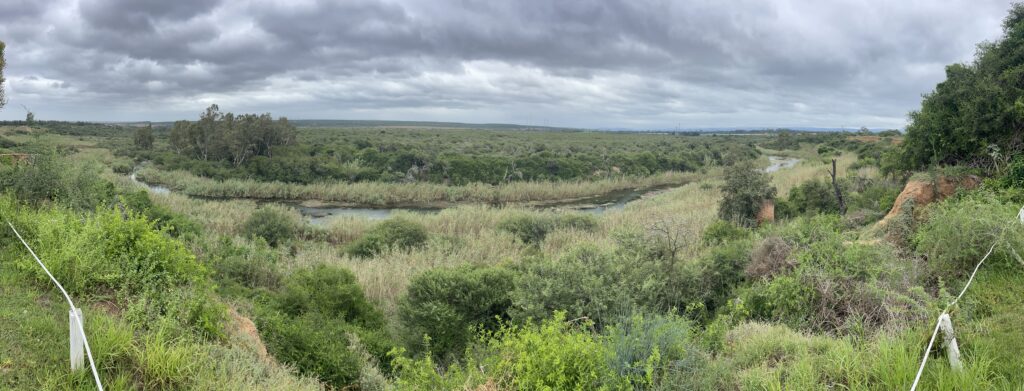
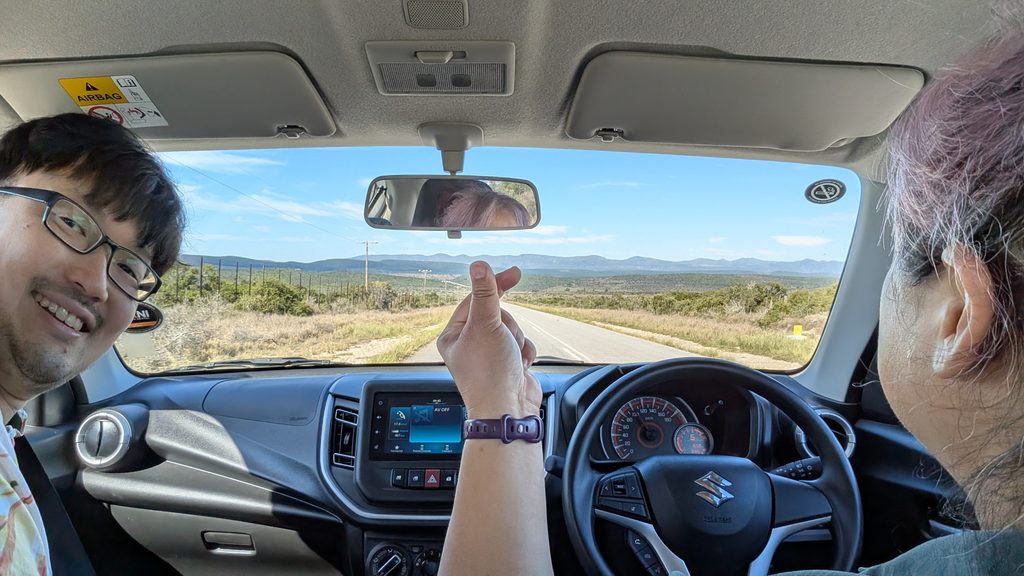
The drive started fine on the main highways leaving Gqeberha, but the countryside roads were a different story. It was misty and slightly rainy – maybe good for learning to drive on the left without heavy traffic, but the roads themselves were challenging! They were often narrow, seemingly less than a standard lane wide in places, with little to no shoulder. Sometimes, damaged sections made them even narrower. A few times, drifting slightly off the paved edge resulted in a concerning shake. After driving tensely for a bit, Christine got into her zone and enjoyed the ride listening to her favorite songs.
There was a road construction between the countryside where our lodge was located and the main town of Addo. There was only one lane available for a couple of miles. Traffic was managed by construction controllers holding cars at each end, letting one direction pass for 20-30 minutes before switching. The final mile to our lodging was unpaved but clearly marked.
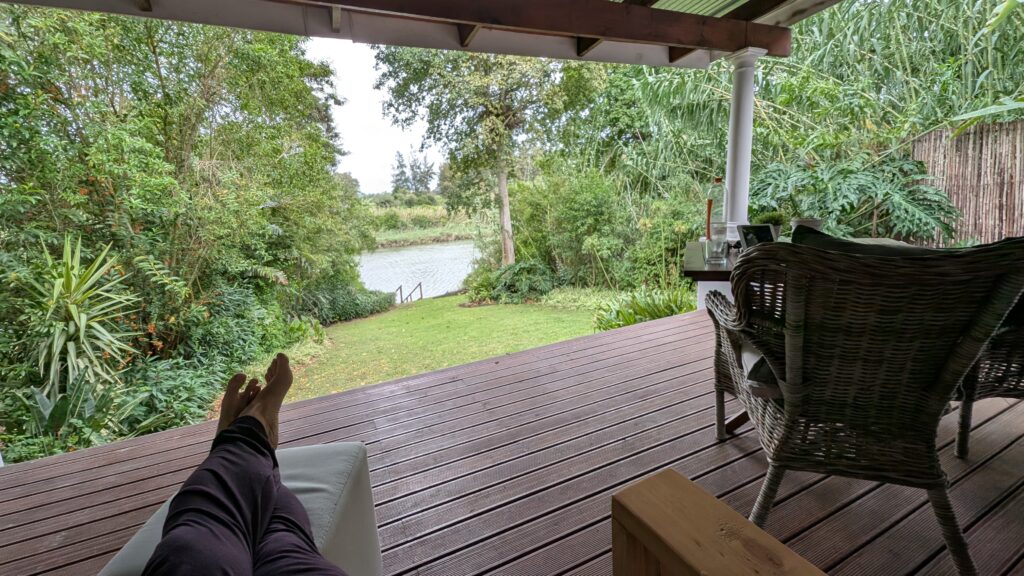
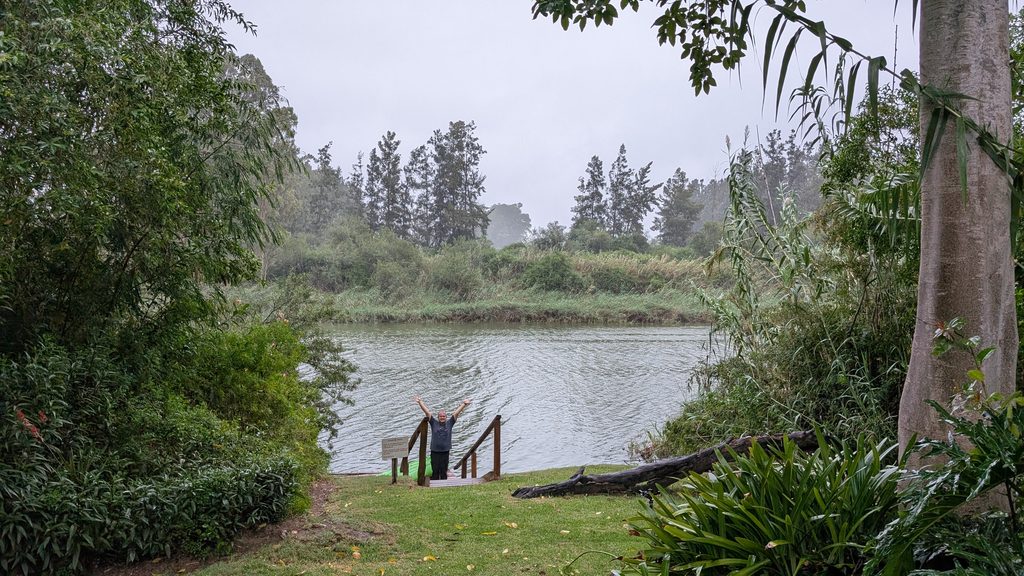
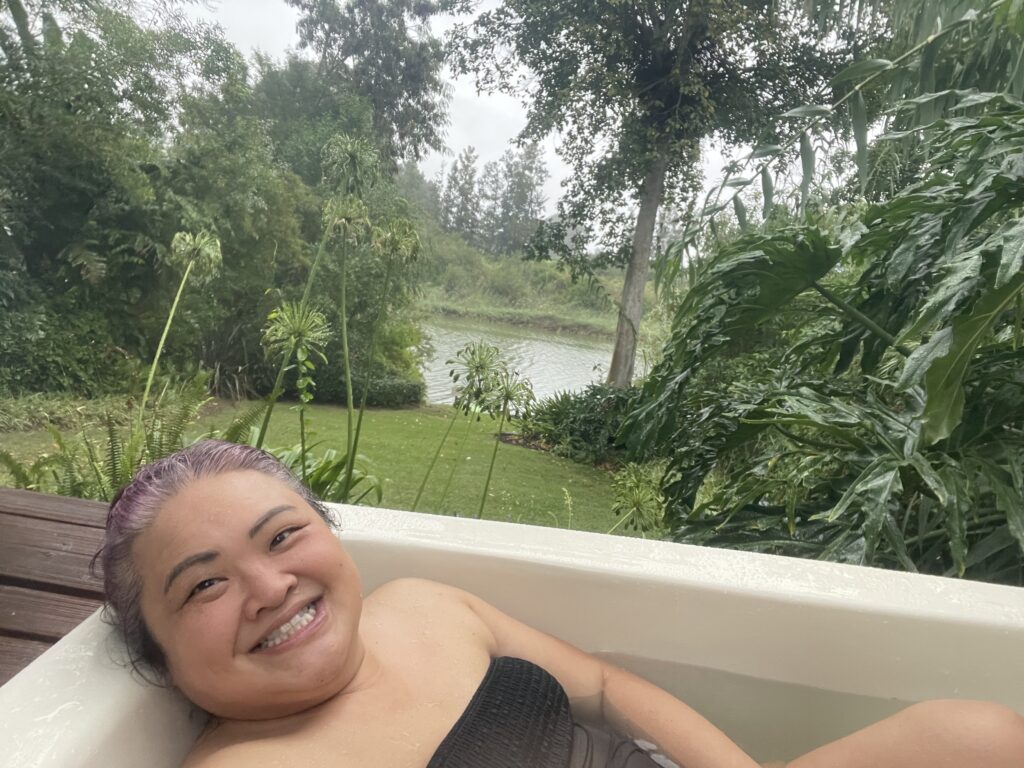
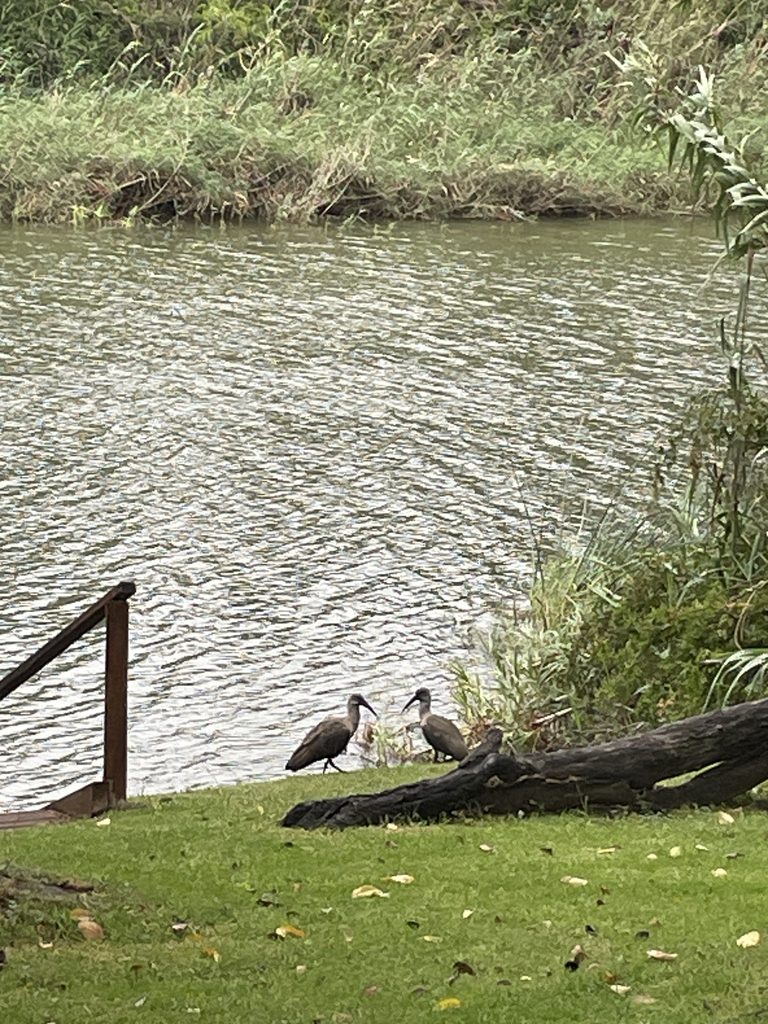
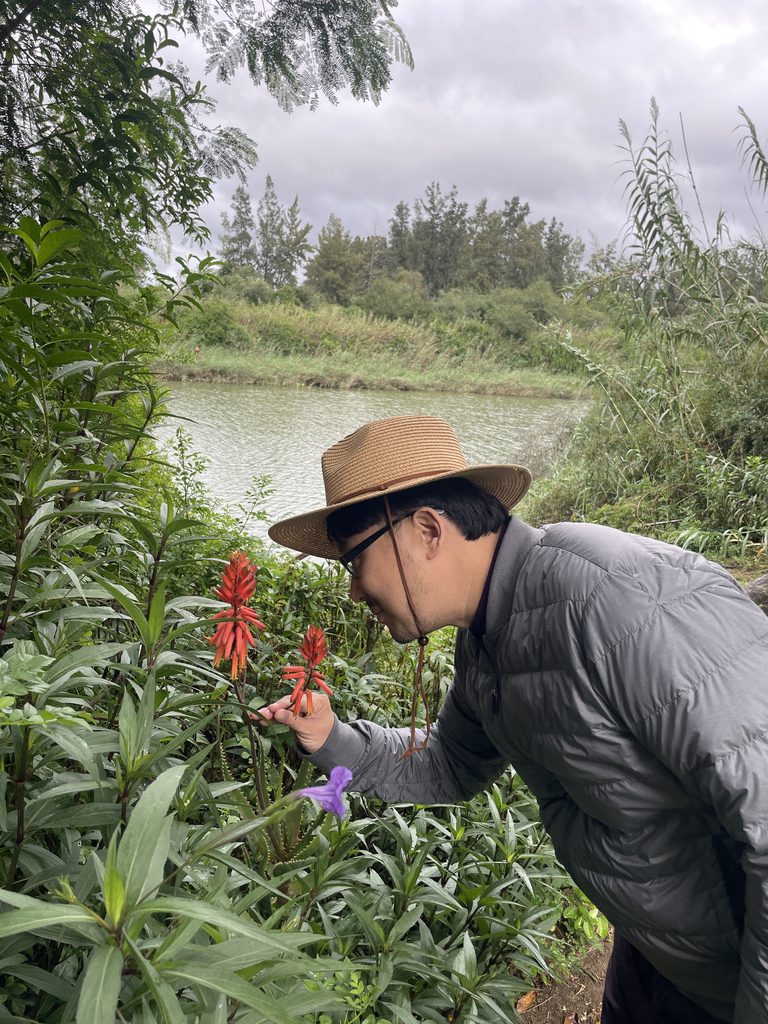
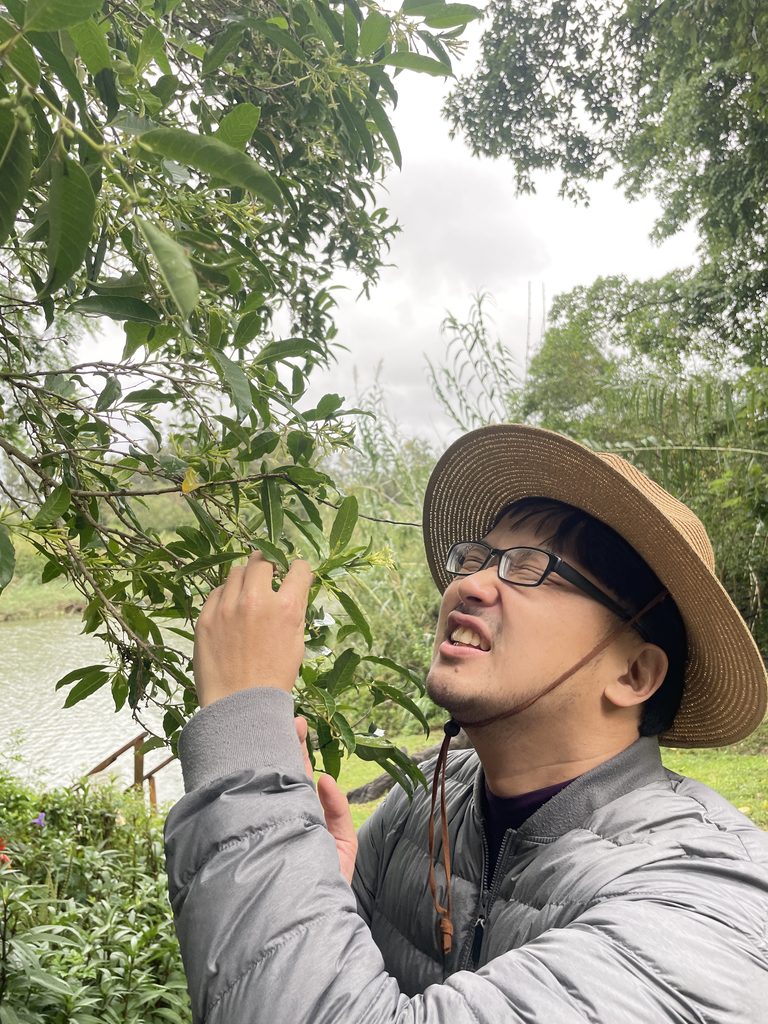
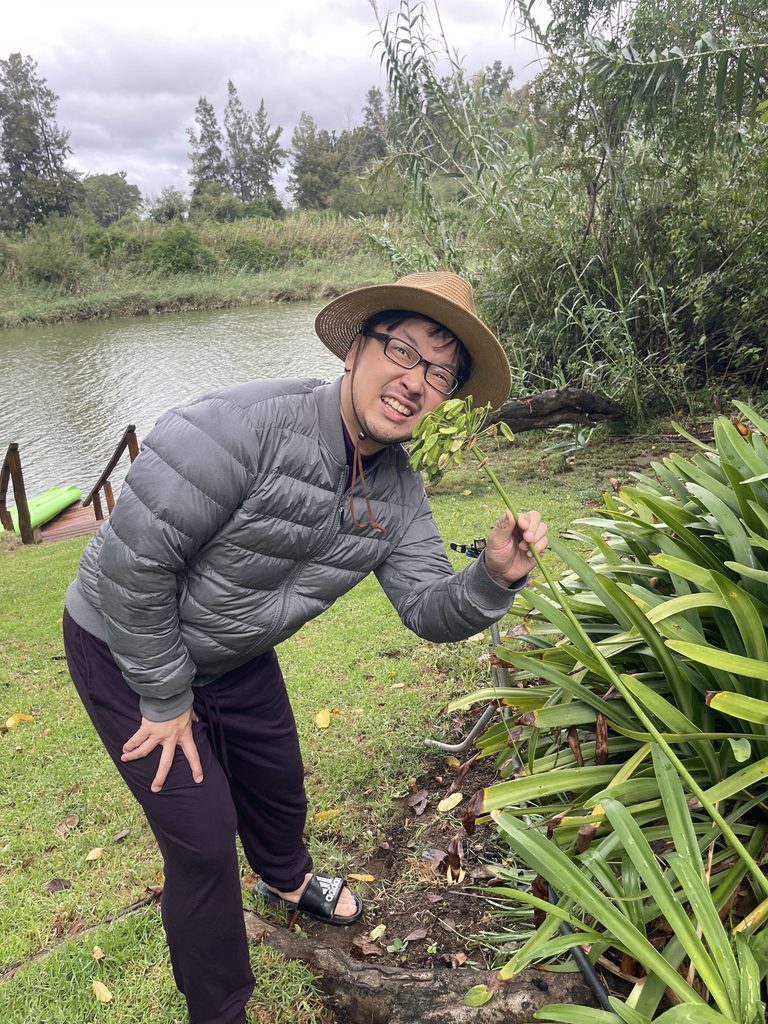
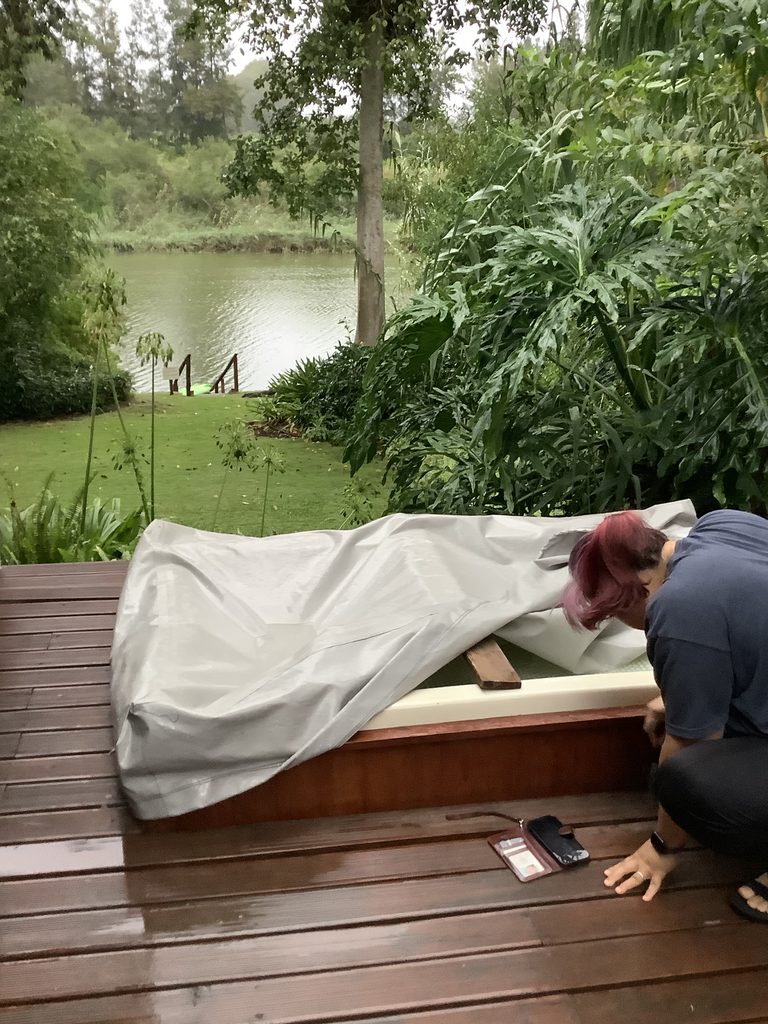
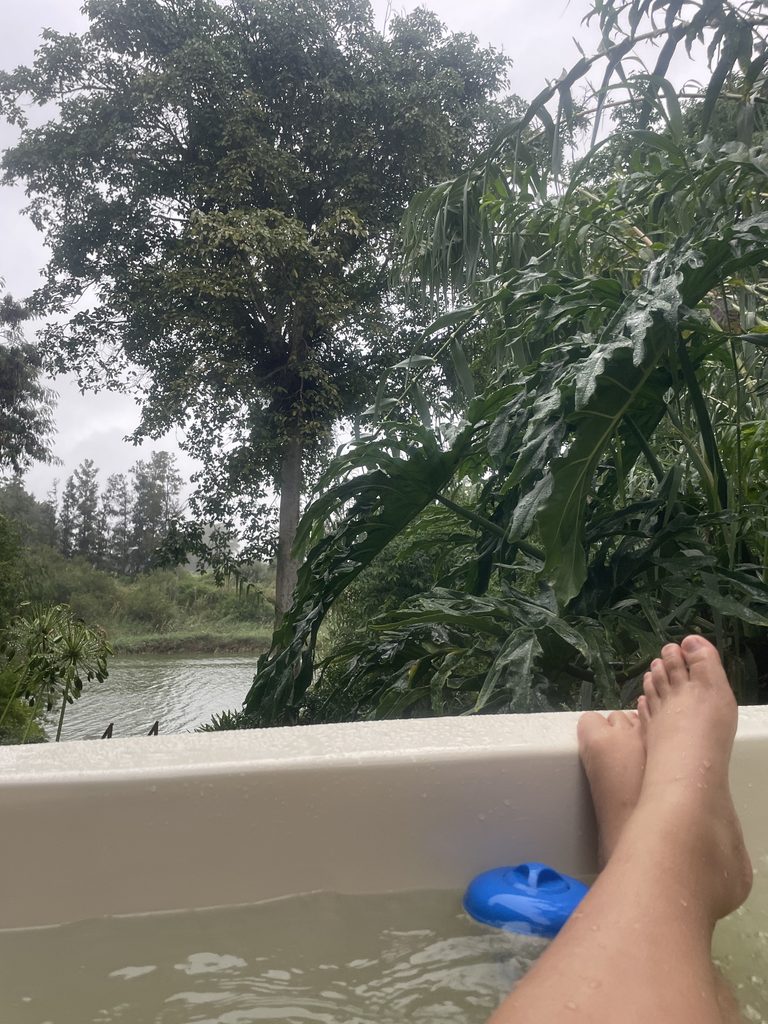
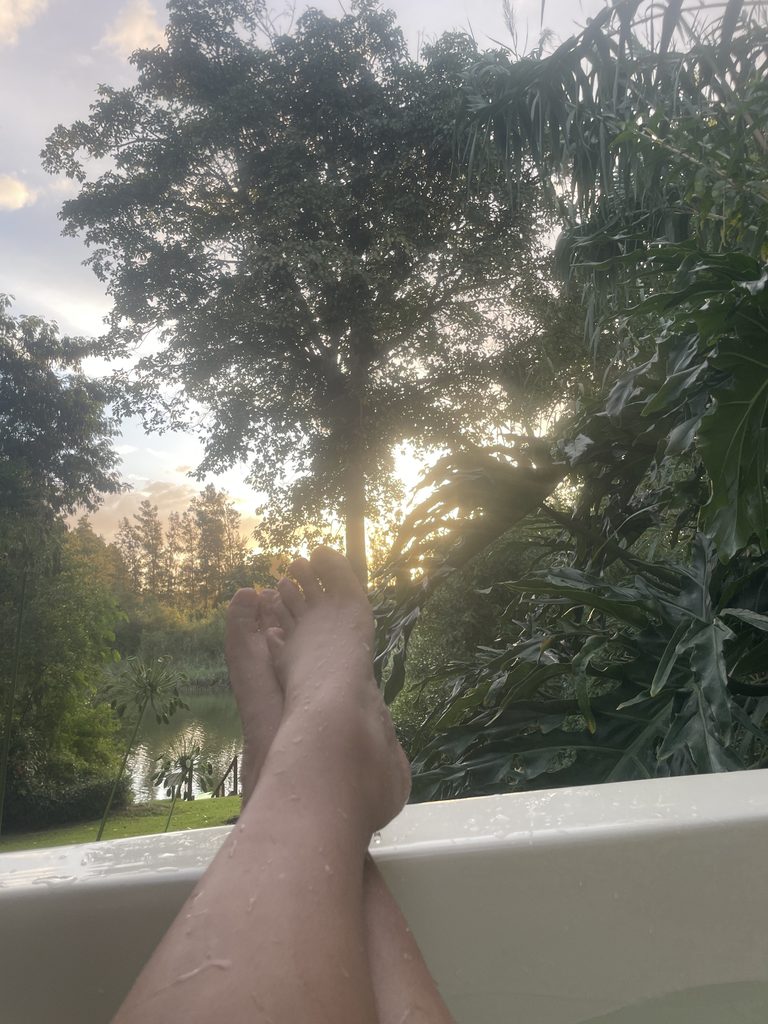
We stayed at Ndlovu River Lodge. It lived up completely to the pictures – fantastic! Our cottage felt incredibly secluded, hidden from the others by thick trees. In cottage number 5, we had our own mini private river beach area and, the highlight, a private hot tub on the deck. Perfect.
Laundry run
The lodge offered guided tours of Addo Elephant National Park for about $100 USD per person, which we’d booked. The question was when to go. Friday was forecast to be cool and gloomy (around 65-70°F), while Saturday promised sun and heat (around 85°F).
We asked the lodge manager. While traditionally cooler days might mean more animal movement, she advised that sunny, hot days are often better because animals congregate predictably around waterholes. This allows for seeing them both on the move (morning) and gathered together (afternoon).
With Saturday dedicated to safari, Friday became our laundry day. The closest laundromat was in the Addo town itself, about a 30-minute drive away. Addo seemed primarily residential, and the only restaurants we could see on the map were part of a lodge.
The laundromat was also part of another lodge called Riverfront Estate. We dropped off our clothes around 11:45 AM. The lady working there initially told us pickup would be the next day. We explained our tour and Sunday departure made that impossible. Could we get it later today? “Maybe end of day,” she offered hesitantly, suggesting 3:00 PM perhaps.
Driving back to our lodge would eat up 1-2 hours. Waiting in Addo town seemed boring with apparently little to do. We felt stressed, worrying we had wasted the day.
After grabbing lunch, we started driving back to our lodge, then changed our mind. We decided to just wait it out at the Riverfront Estate’s little restaurant/cafe. We ordered tea and ice cream and explained to the staff member we were just killing time waiting for our laundry. Serendipitously, she said, “Let me check on that for you,” disappeared towards the laundry area, and returned 15 minutes later with our clean, folded clothes! Apparently, the laundry lady had finished but hadn’t notified us, and this helpful staff member (perhaps even helping fold!) sped things up dramatically. Huge relief!
We grabbed some snacks at the Addo SPAR grocery store and headed back to our lodge by 3:00 PM. The rest of the afternoon and evening were spent blissfully soaking in our private hot tub, enjoying the misty, quiet atmosphere (with only a few mosquitoes that first day). The seclusion felt so complete, skinny dipping seemed like the only logical option!
Addo Elephant National Park
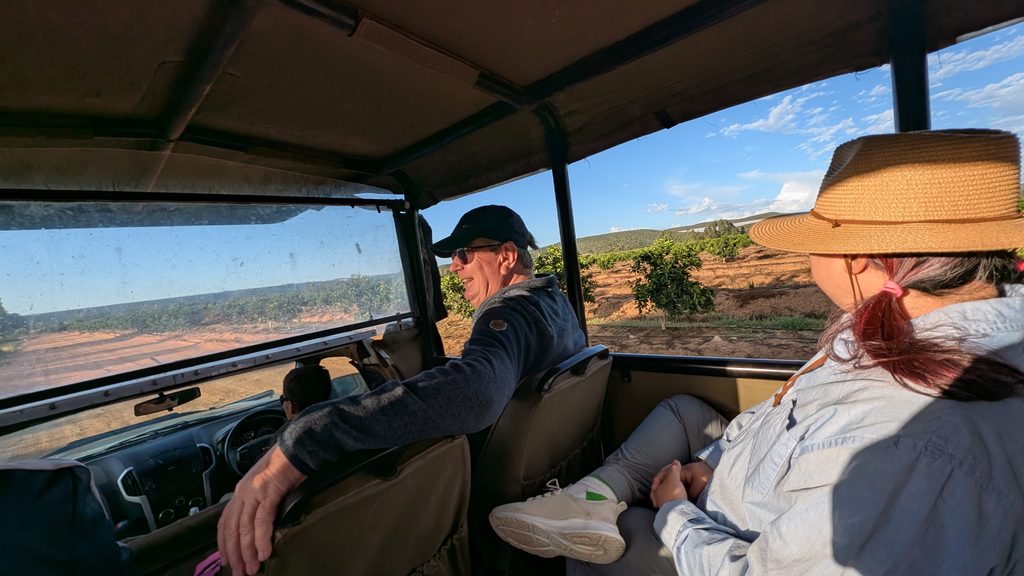
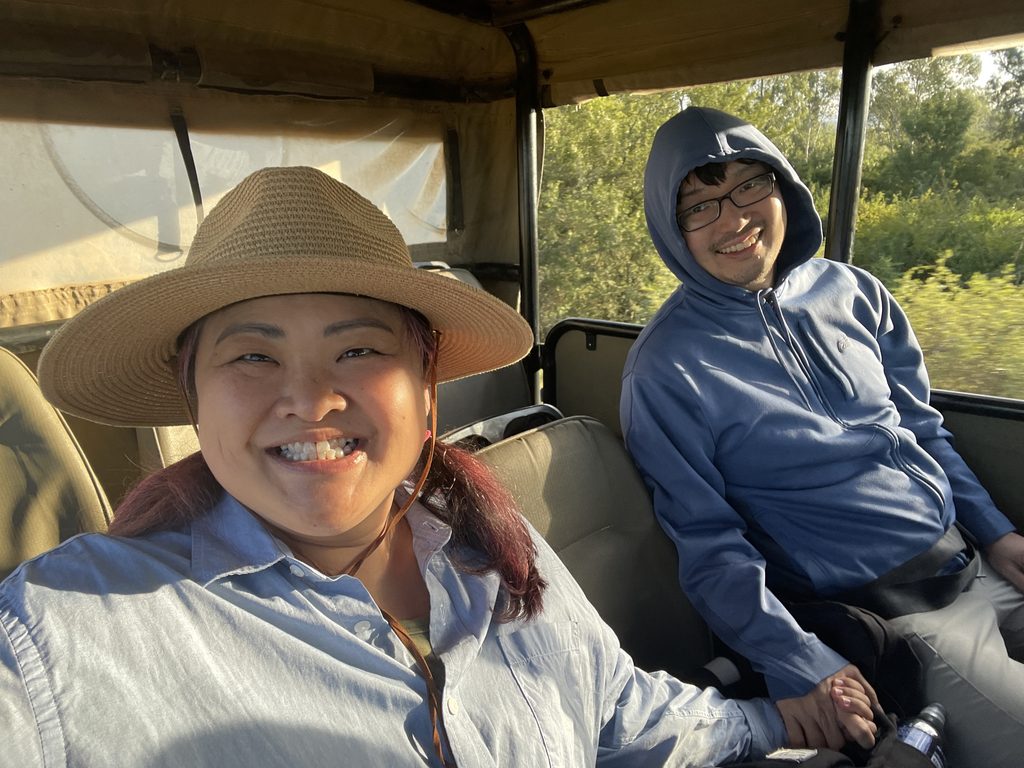
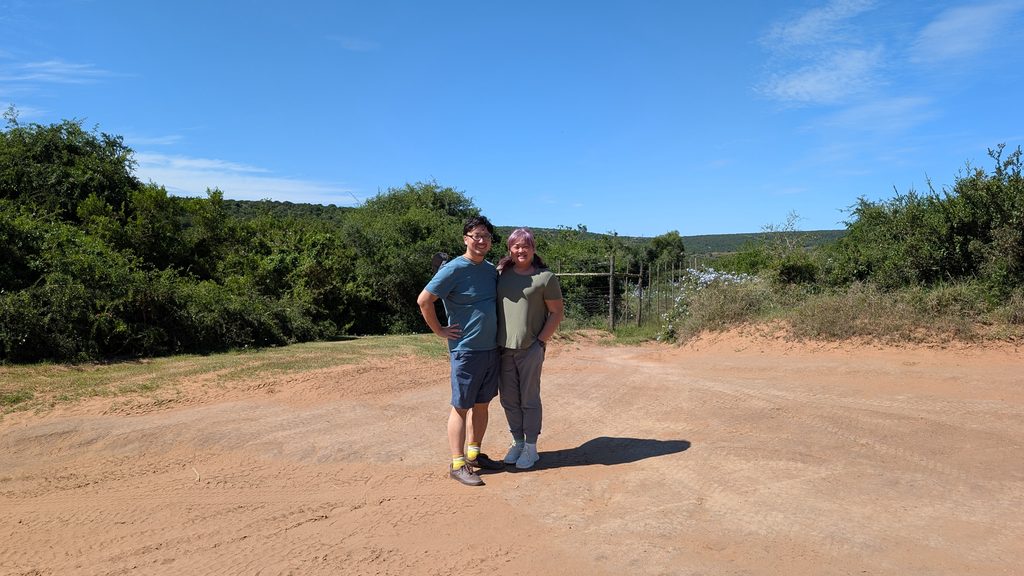
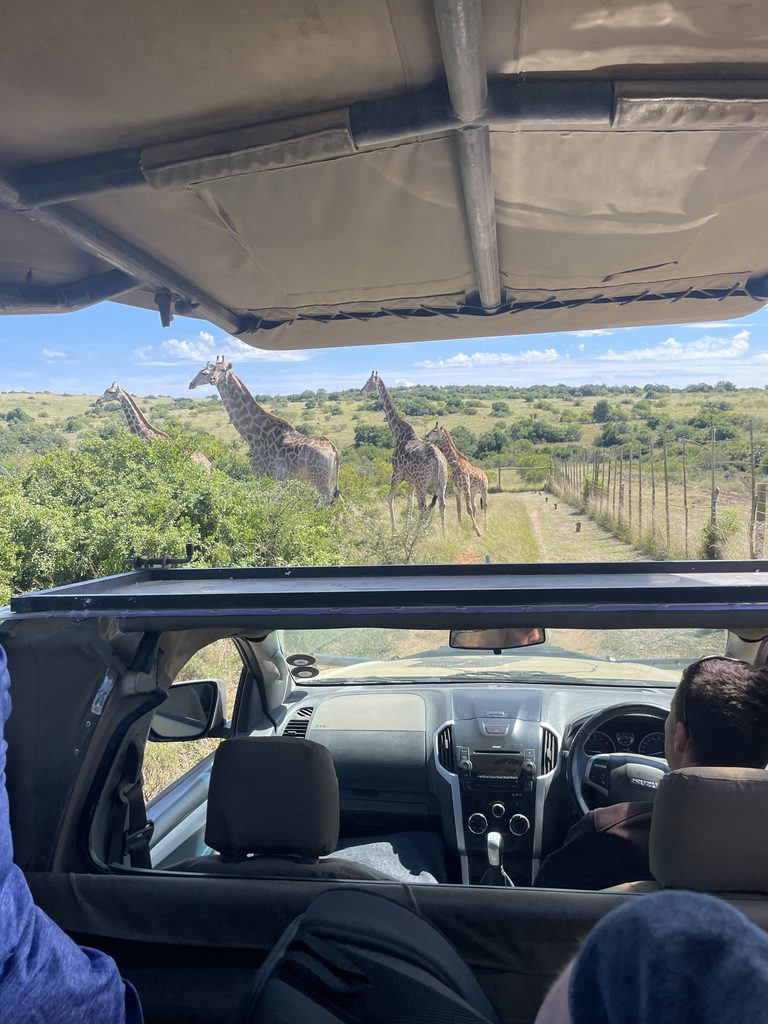
This was the main event! We left the lodge at 7:00 AM with our guide in an open-top safari vehicle.
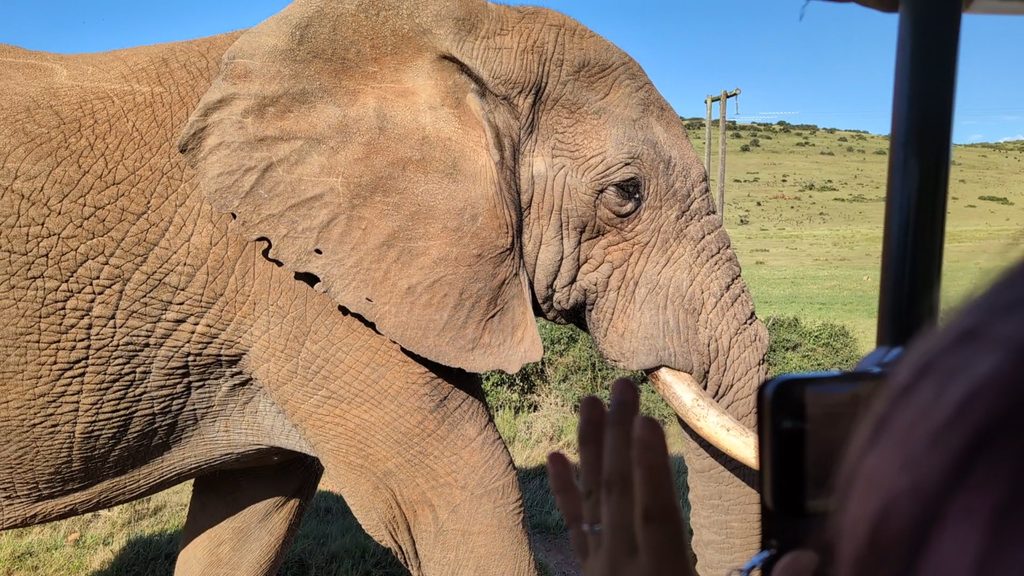
First, we drove through Addo Elephant National Park. We saw several elephants relatively quickly, including one memorable female that was separated from her pack. Our guide joked that maybe it was “hungover” after a late night elephant party. The absolute highlight here was a large elephant casually walking down the road right past our vehicle, mere feet away! We also spotted what our guide excitedly identified as a hyena darting across the road – apparently a rare sighting he hadn’t personally witnessed in his two years guiding there.
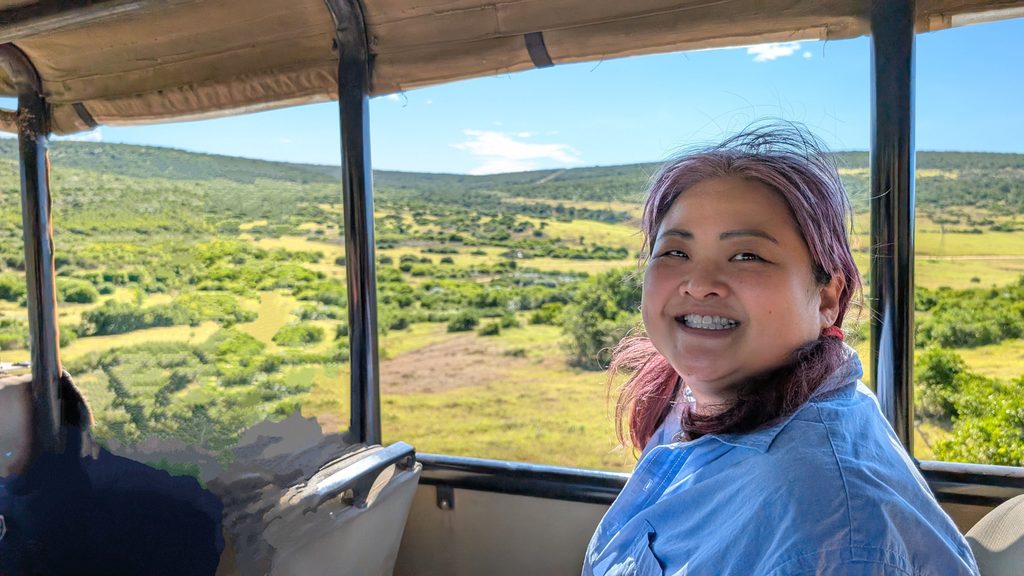
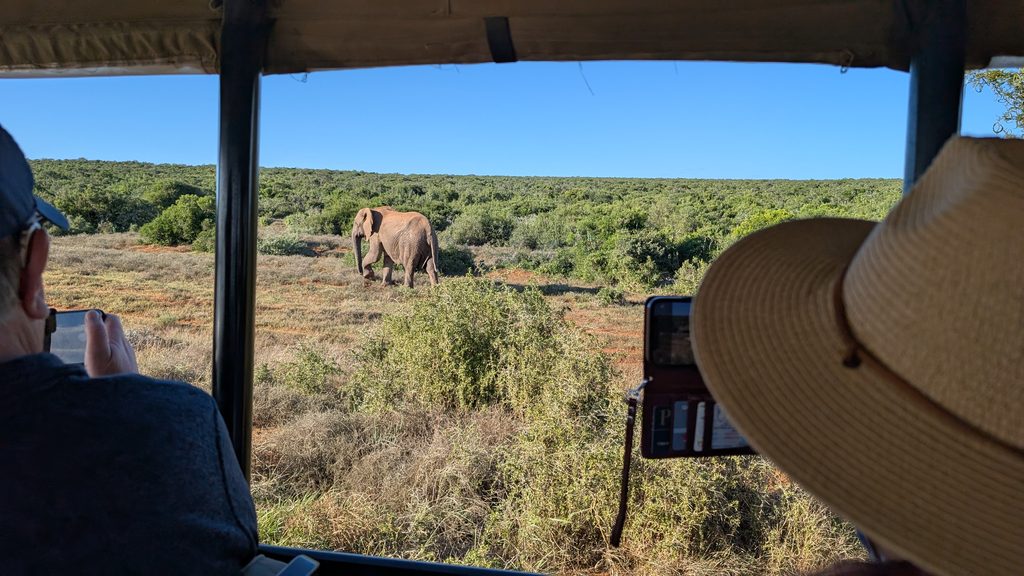
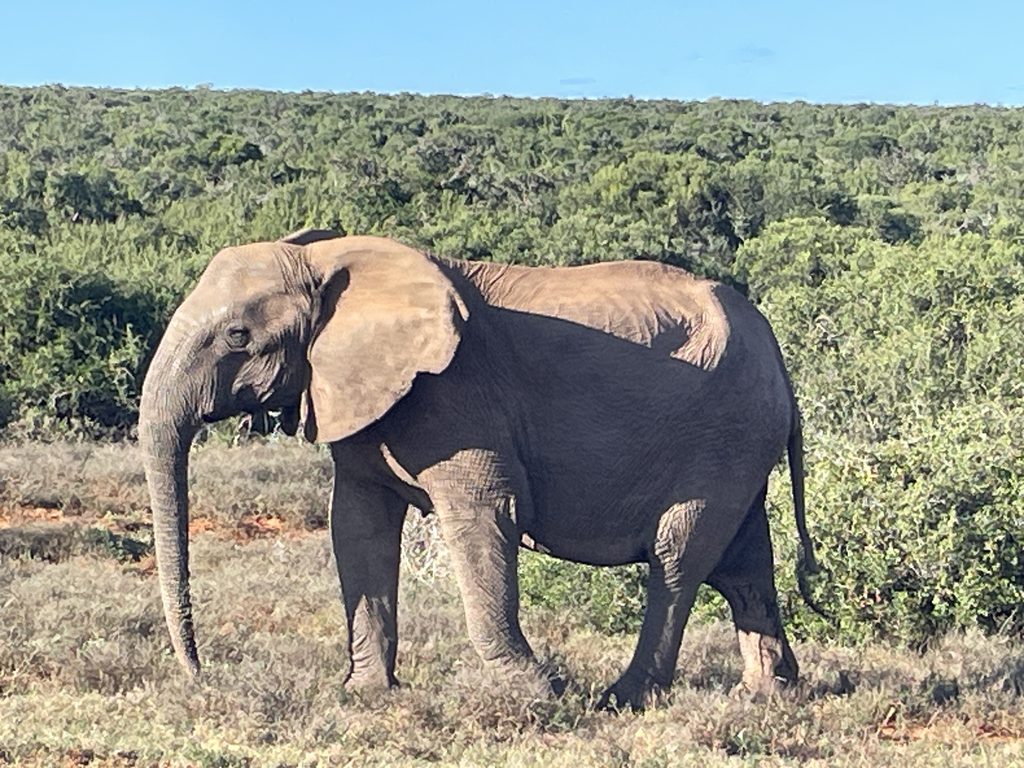
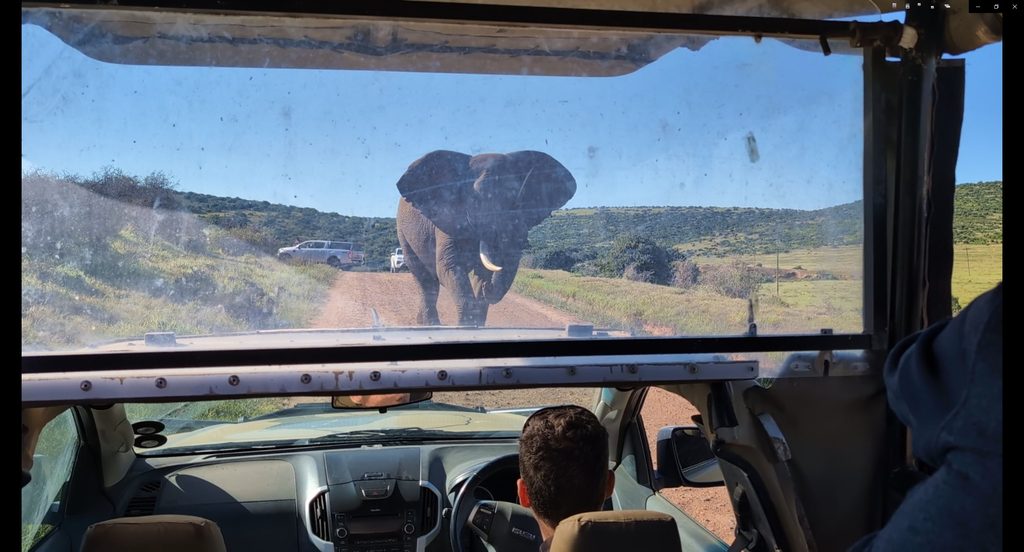
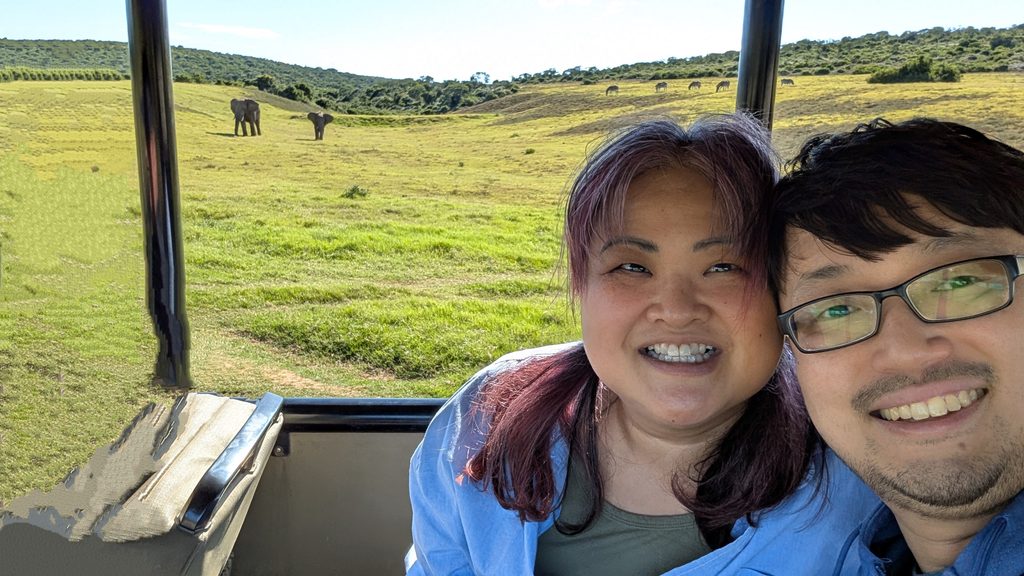
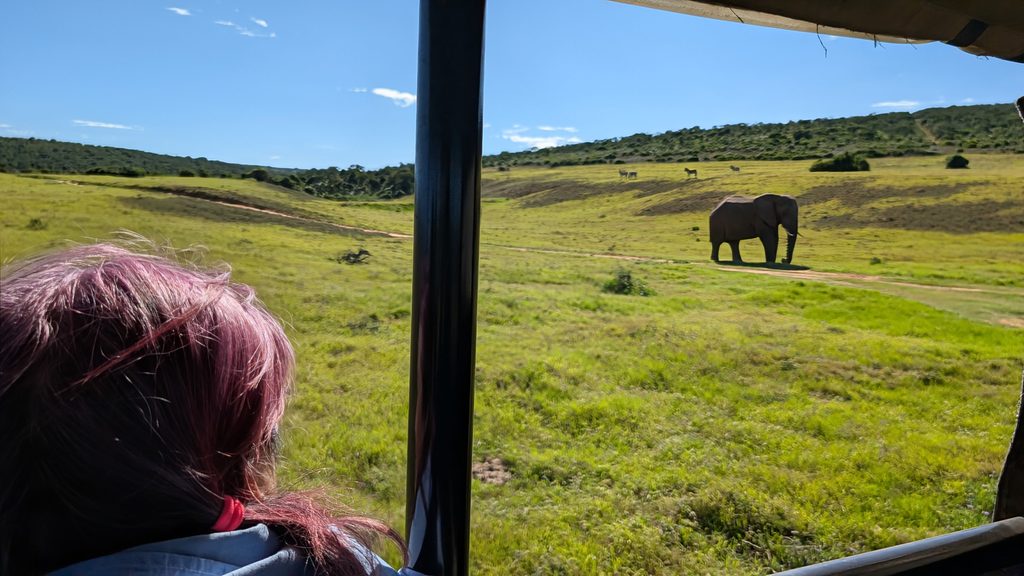
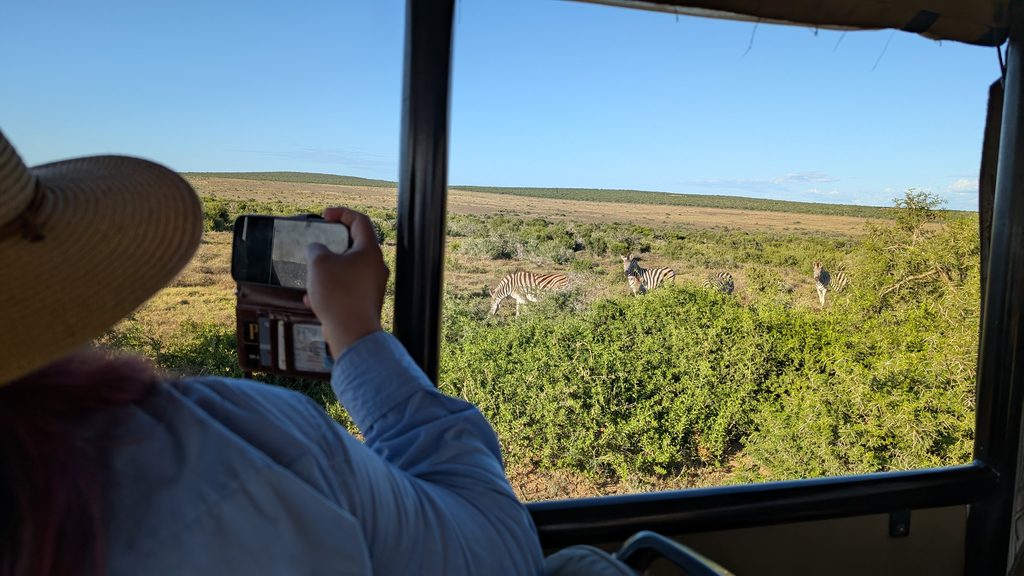
Our tour plan included crossing the National Park to visit the adjacent Scotia Private Game Reserve. Scotia is smaller but known for a higher density of animals, increasing viewing chances. We exited Addo’s eastern gate and entered Scotia.
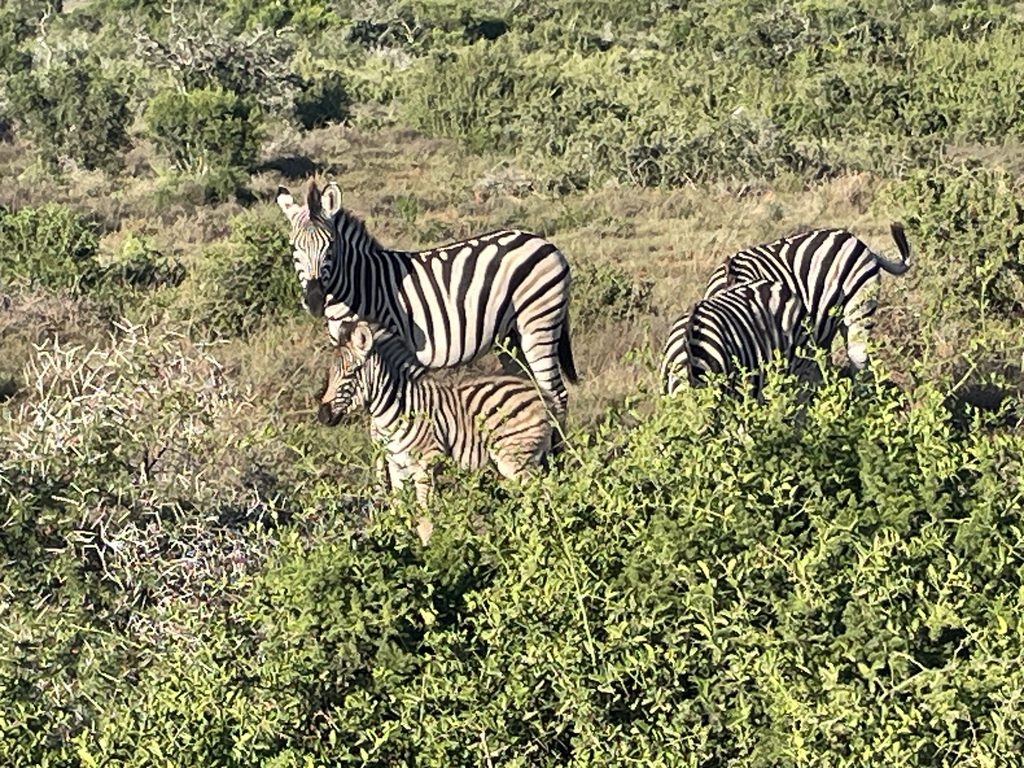
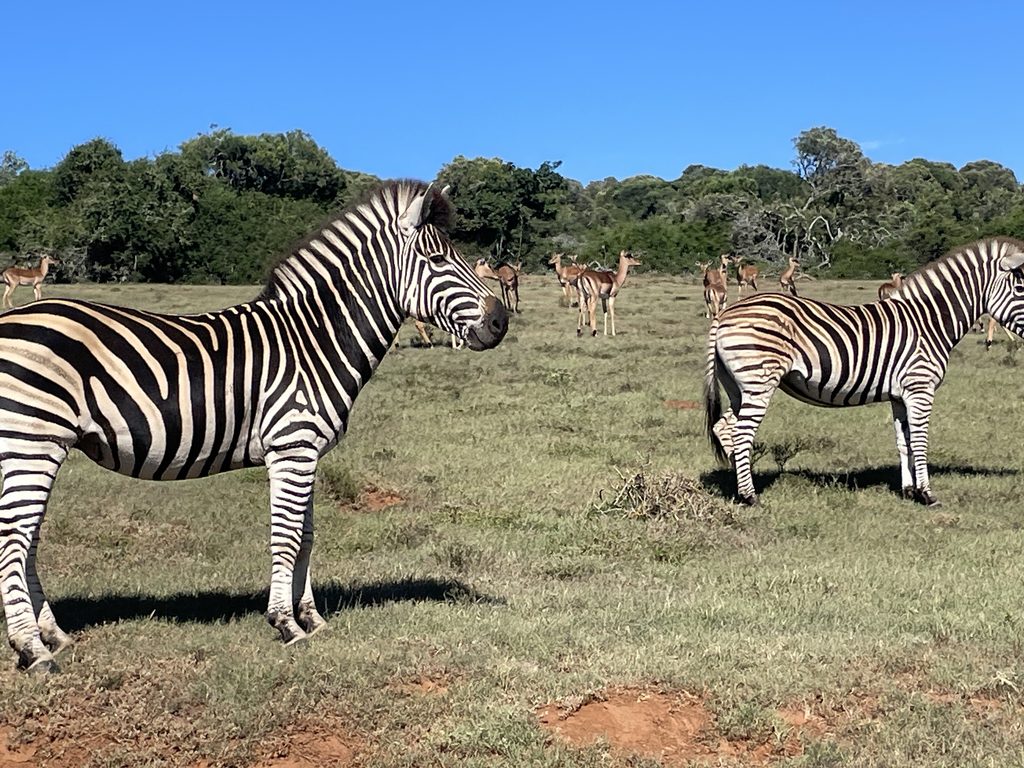
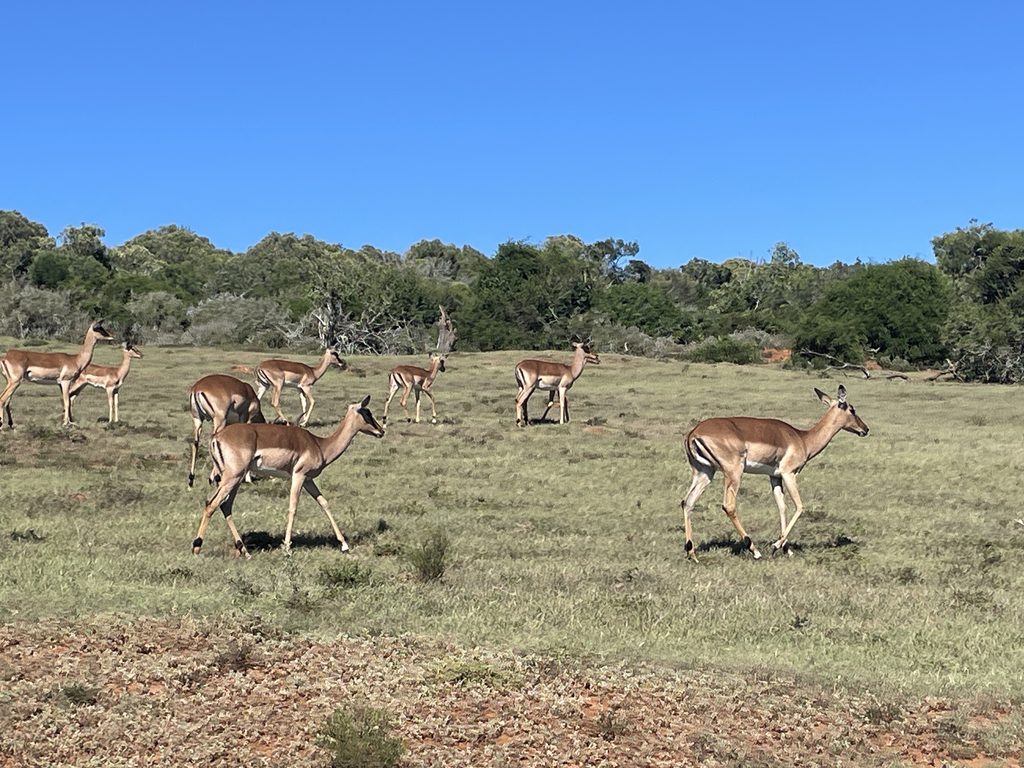
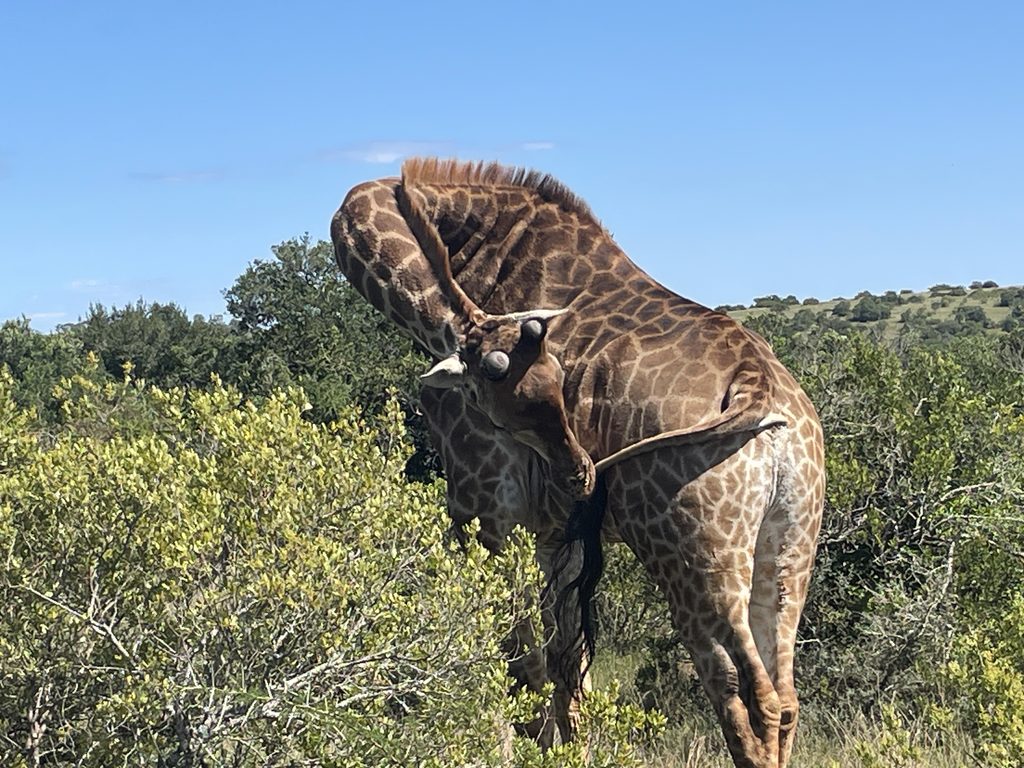
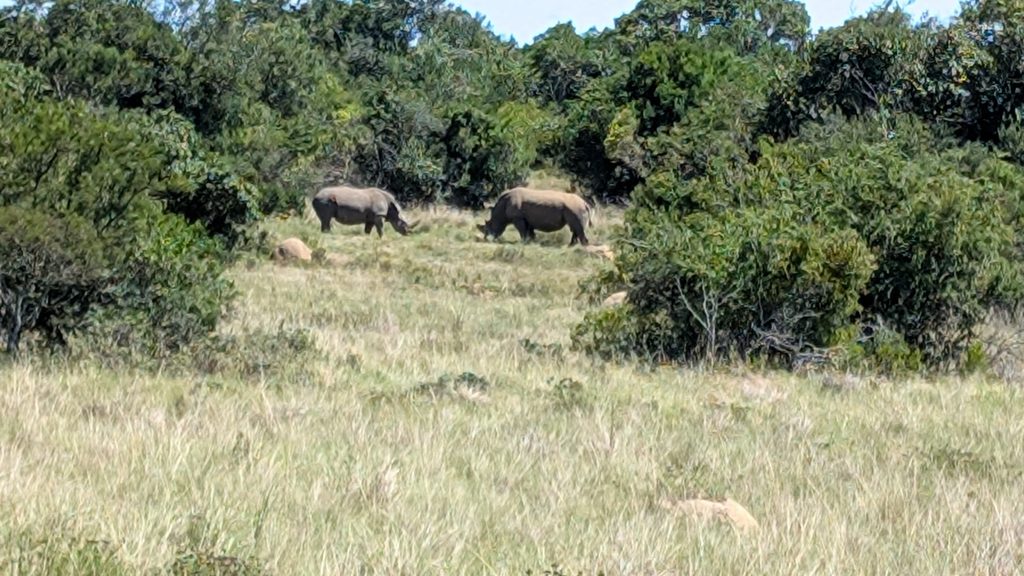
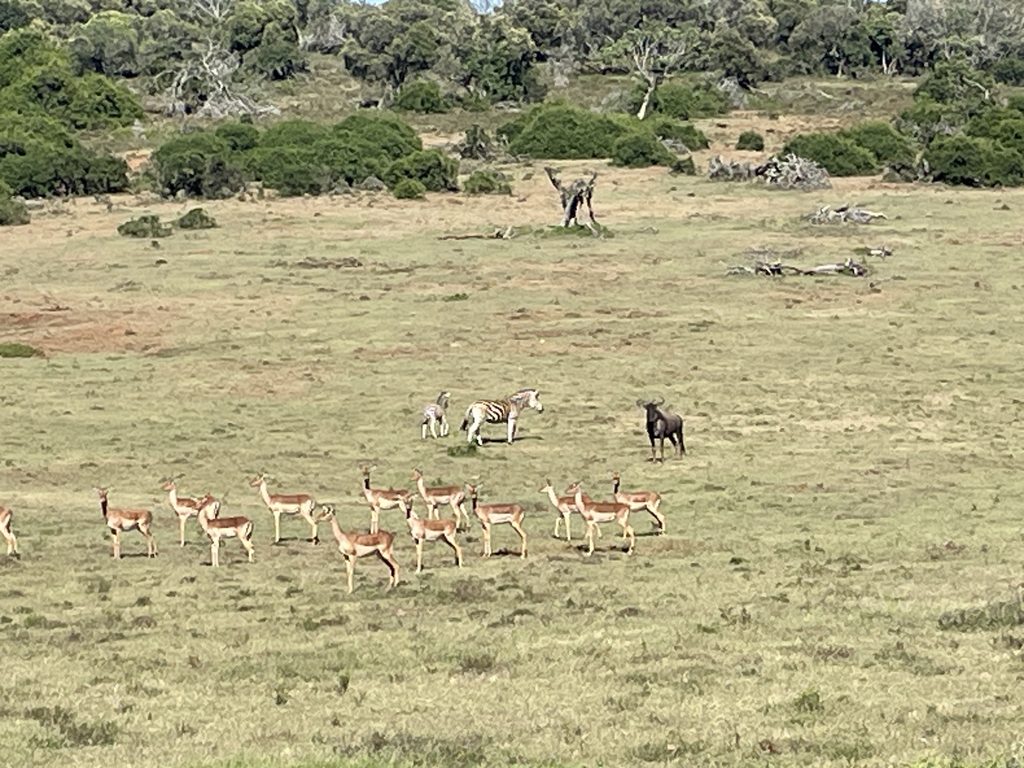
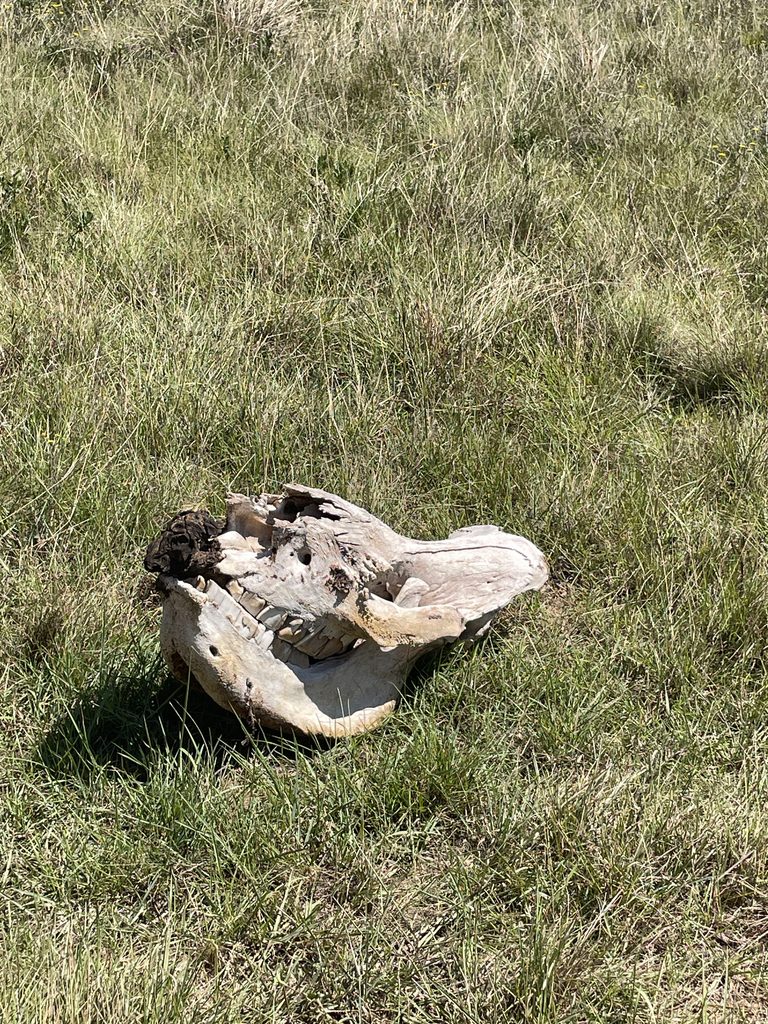
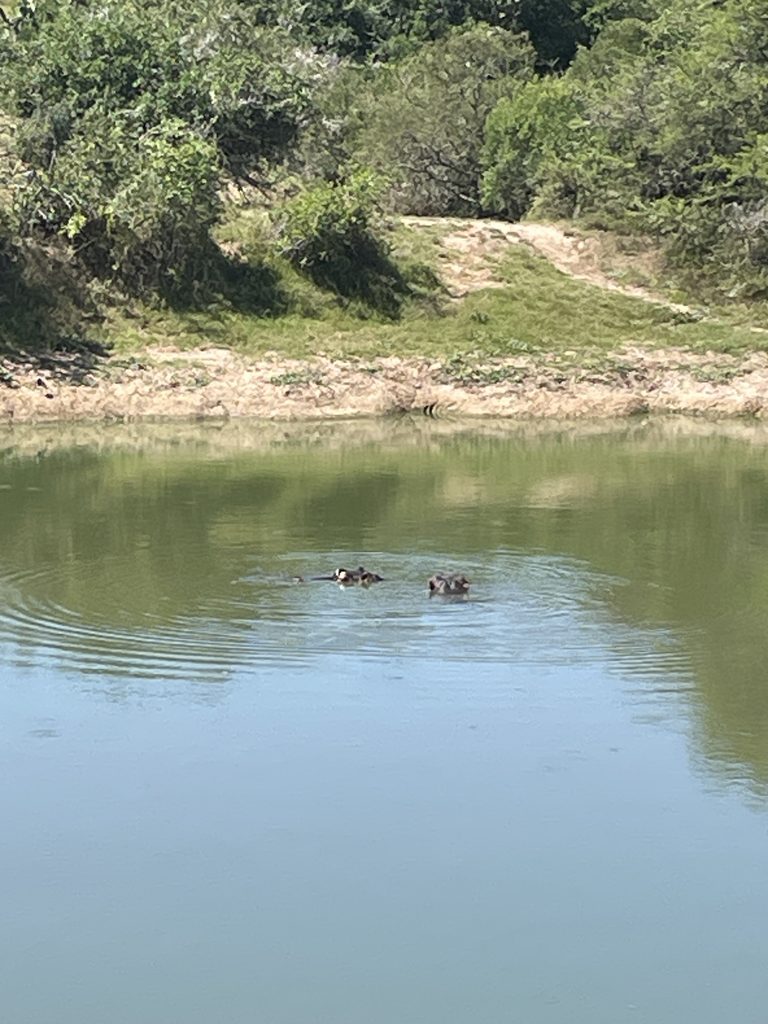
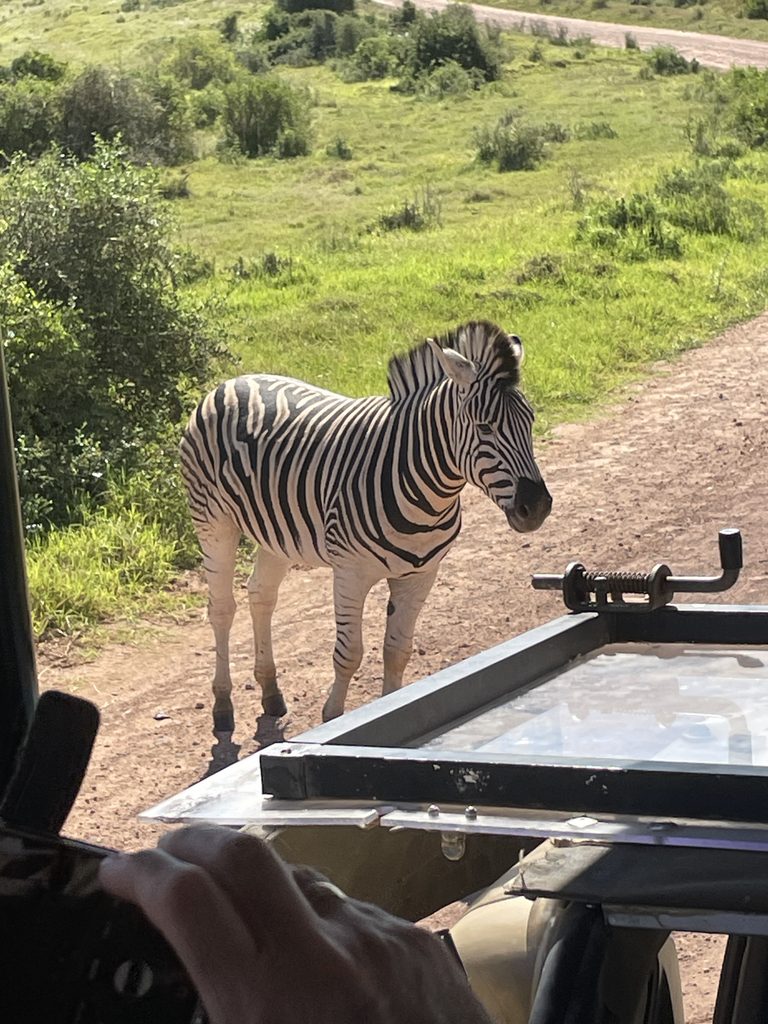
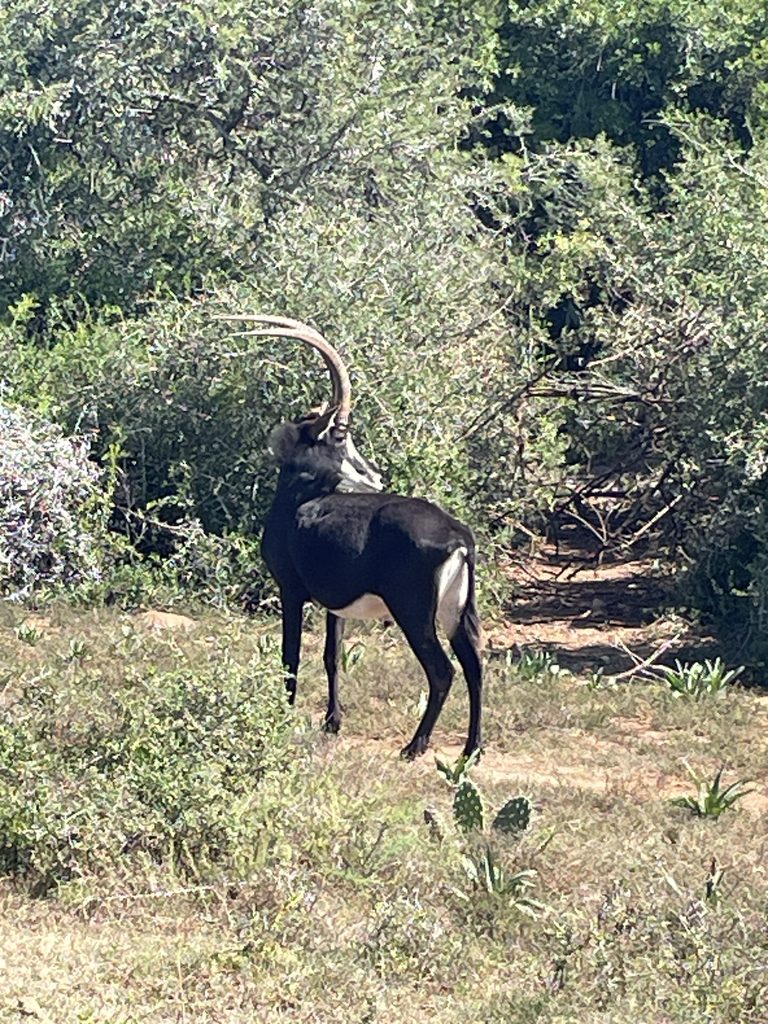
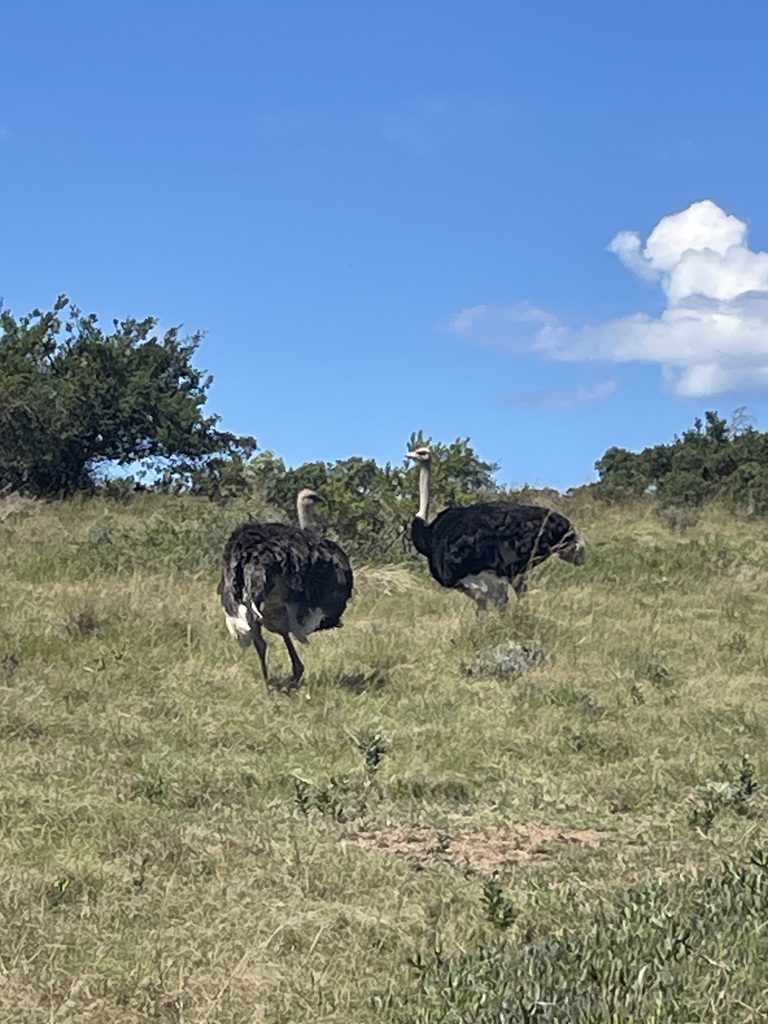
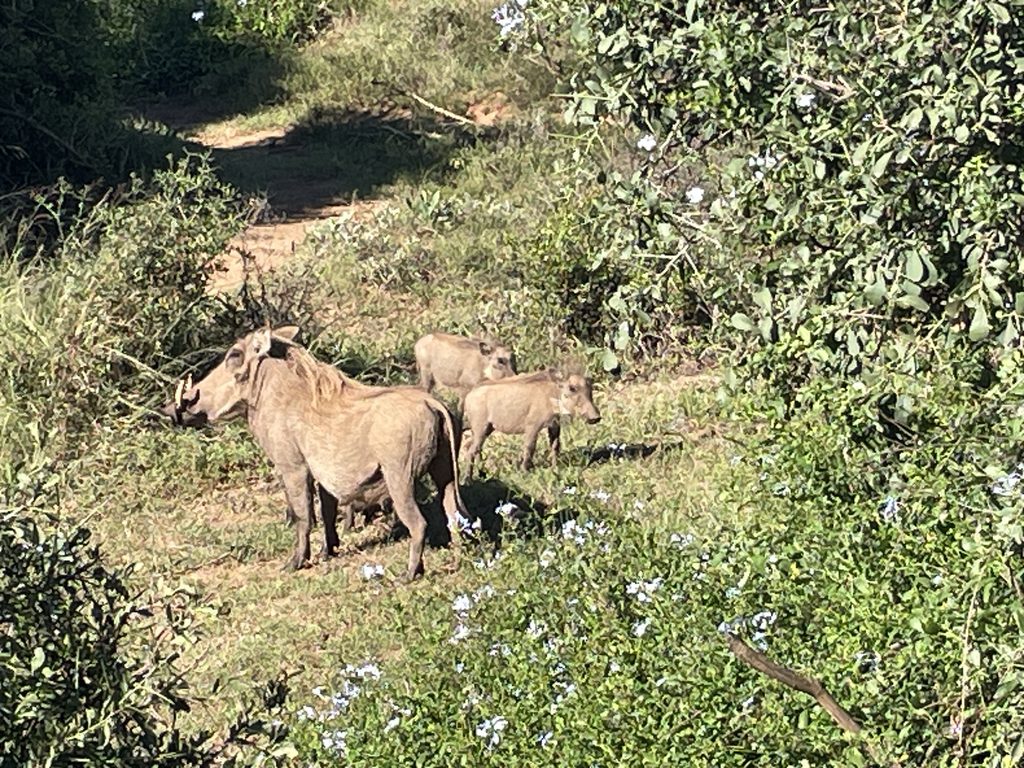
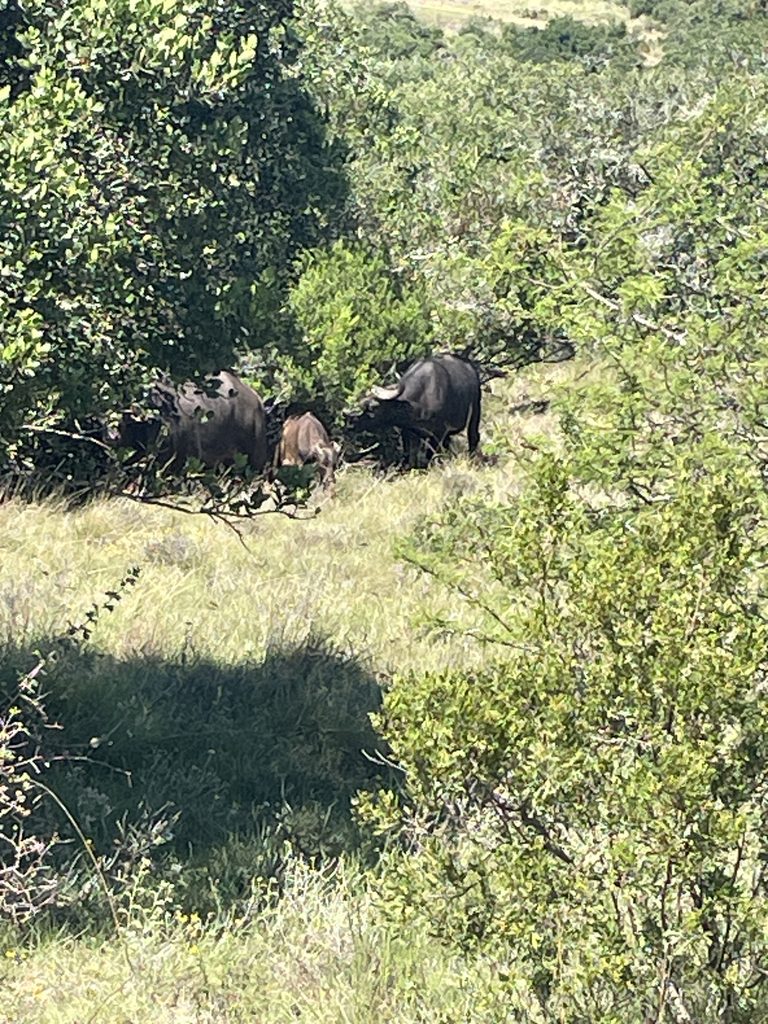
Scotia felt teeming with life. We saw herds of zebras, wildebeest, Cape Buffalo, warthogs galore, and monkeys. The guide skillfully tracked down a group of 12 giraffes peacefully munching leaves near the park fence – he mentioned there used to be three babies, but now only one, likely due to lions. We also spotted ostriches, submerged hippos and crocodiles in waterholes, and, thrillingly, three rhinos in the distance, standing stoically. The guide had spent some time earlier trying to track lions based on nervous zebra behavior. He said, “hey, do you see those Zebras over there all looking in one direction? They smell a predator and are alert”.
We saw guides from different companies communicate and share information. “Seen the lions?” “No, maybe up the hills?” “Giraffes are over by the fence.” It’s a collaborative effort. Throughout the day, we noticed most other safari vehicles were filled predominantly with white tourists. Occasionally, a vehicle with all Black tourists would pass, sometimes seeming to drive faster. We wondered if this reflected different tour package price points or perhaps just different tour styles.
We stopped for breaks within Scotia at designated lodge areas (you can’t just get out of the vehicle anywhere in the reserves). Our guide surprised us by setting up a snack break with nuts, treats, and hot tea from an icebox. Later, for lunch, he used the cooking facilities at one of the lodges but prepared a BBQ himself using ingredients he brought: delicious chicken thighs, kudu sausage and sides.
We returned to our lodge around 4:00 PM after an incredible day of wildlife viewing. We spent the rest of the evening in the hot tub, reflecting on the amazing sights. The mosquitoes were definitely more active this second night, making bug spray essential!
RUCC Port Elizabeth Church
Our Sunday started with the drive back from our lovely lodge near Addo to the Gqeberha (Port Elizabeth / PLZ) airport. The weather was sunny this time, making the drive easier and revealing more of the landscape we’d passed through in the mist on arrival.
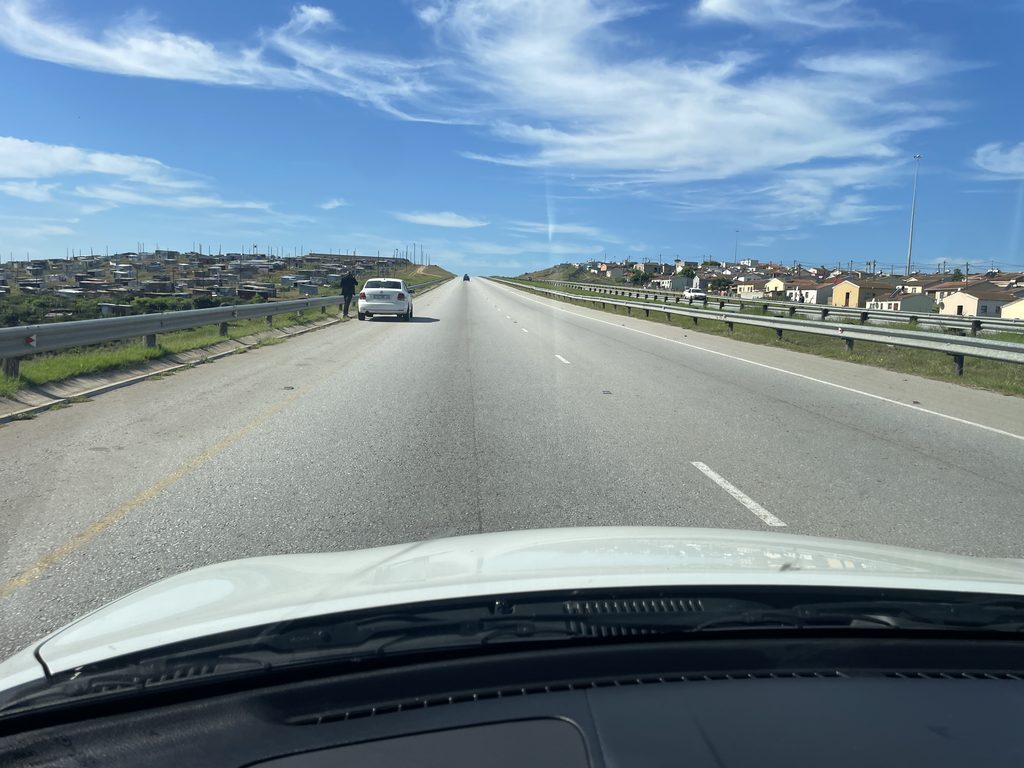
One observation that struck us again, perhaps even more clearly than in Johannesburg, was the stark layering of wealth and poverty. Driving through suburbs and outskirts, you could see distinct zones: areas with large, established brick buildings and well-paved roads transitioned sharply to neighborhoods with smaller brick houses, then to areas with painted wooden houses (often looking basic inside), and finally to informal settlements. These latter areas featured tiny shacks built from salvaged materials like tin, aluminum, and styrofoam. Interestingly, even the most basic shacks often had satellite TV dishes. Some zones had makeshift electricity poles serving multiple dwellings, while others seemed even more rudimentary. It was a very visible progression, a sort of “onion ring” effect of diminishing infrastructure and housing quality as you moved outward.
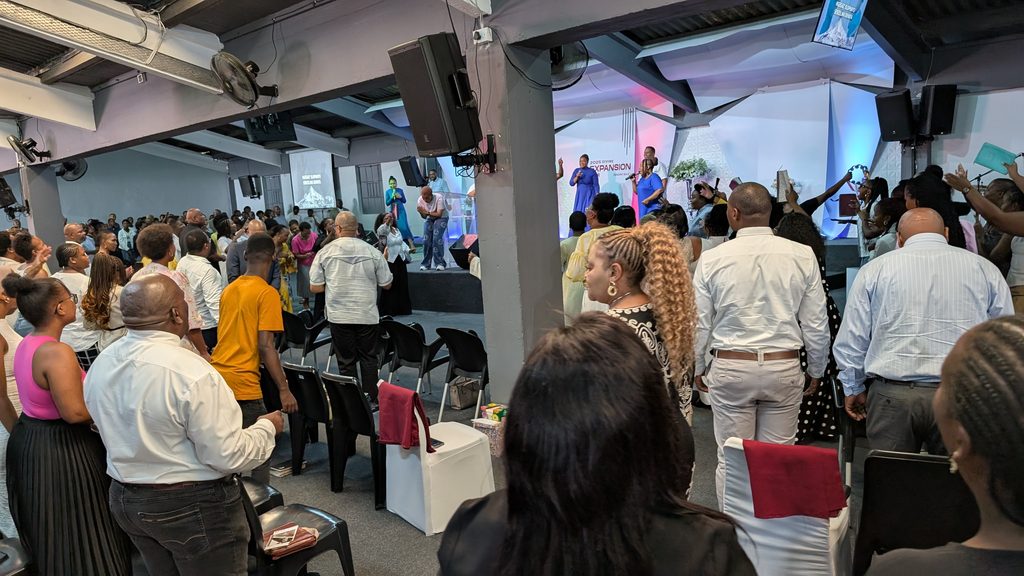
Before heading to the airport, we decided to experience a local Sunday service. We’d aimed for a distinctly Black African church experience. Finding information online was tricky – some churches had early services we couldn’t make, others had inconsistent online details, while many well-documented ones appeared predominantly white. We eventually found a seemingly middle-class Black church with a website, active Facebook group, and a 10:30 AM service time.
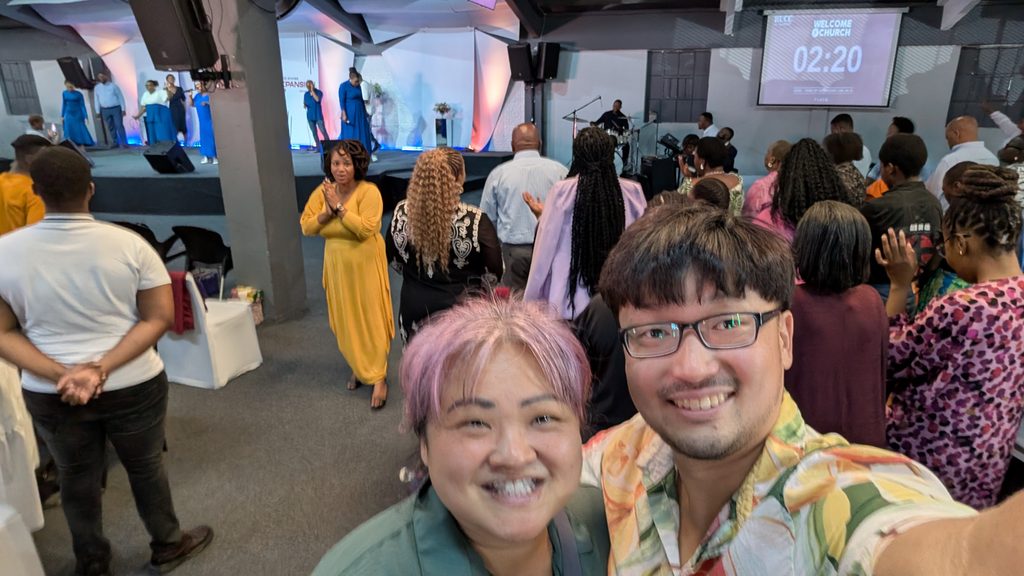
The drive itself offered glimpses of people dressed in their absolute Sunday best, walking along the highways towards various churches – families in bright colors, men in full suits, even teenagers in surprisingly modern, trendy outfits miles out in the countryside. Arriving at our chosen church, the parking lot was full, and everyone looked vibrant and colorful.
The service itself was long – about three hours, though we slipped out after two to grab lunch. The worship was incredible! The energy was high, with passionate singing, harmonies, dancing, and jumping – like being surrounded by a 400-person gospel choir. Much of the worship (and later the sermon) was in Xhosa. The church layout resembled a modern US suburban mega-church. However, the message felt very familiar from conservative church backgrounds: a heavy emphasis on fundraising (“Divine Expansion”), exhortations to give sacrificially (until it “hurts”), linking financial giving to God’s blessings, and warnings against wasting money elsewhere. There was also a lengthy promotion during announcements for a business networking conference co-sponsored by the church, highlighting the importance of connections and even discussing the impact of AI on future jobs – all learnable at their conference (for a $25 fee, which is a lot of money here). The service closed with a performance by a local gospel singer, who also promoted her upcoming concert tour.
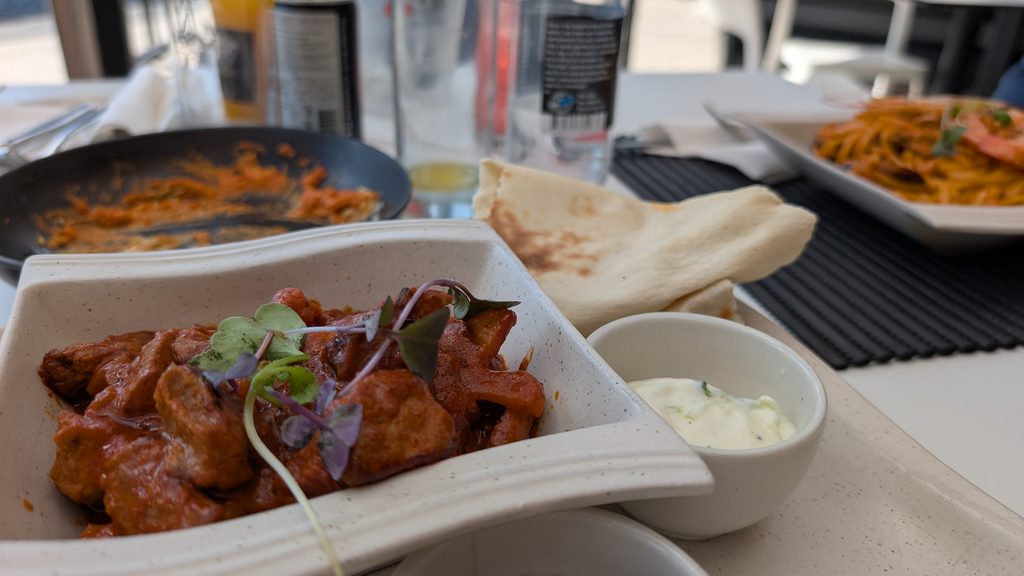
After leaving, we quickly found a restaurant for lunch. Mid-meal, a friendly guy approached us, recognizing us from the church! It was a surprising coincidence given the distance. He just wanted to say hi and wish us well on our travels.
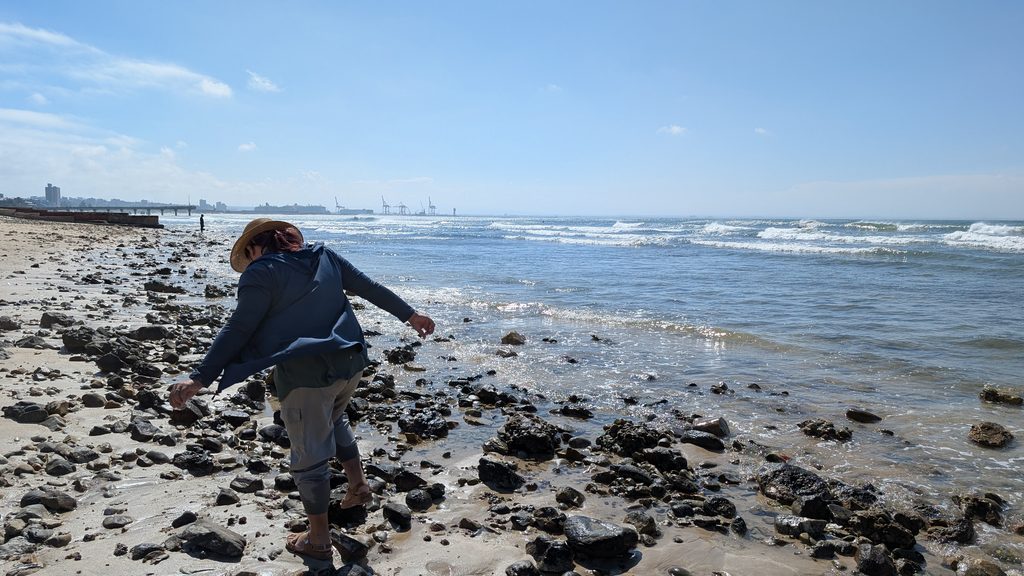
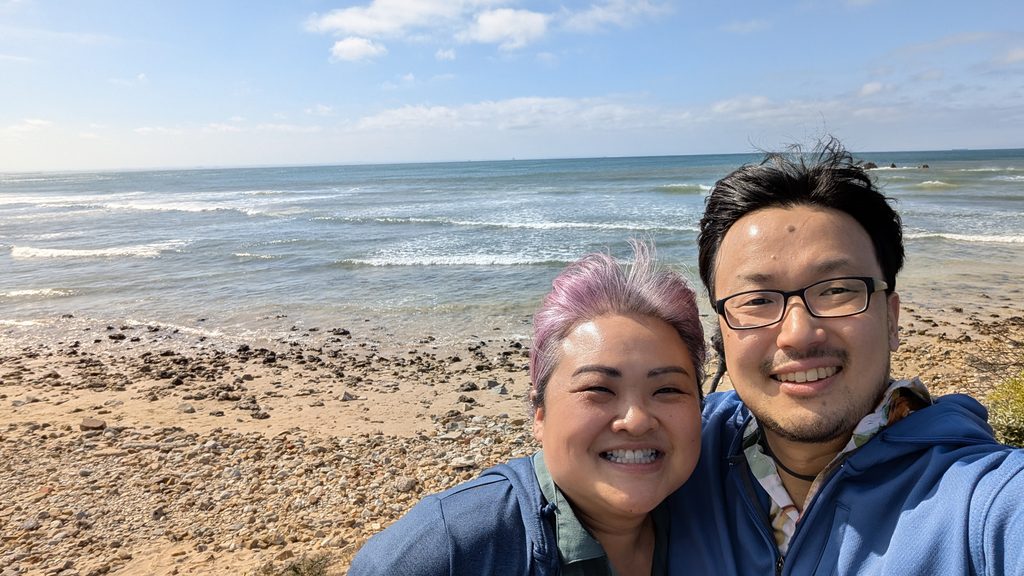
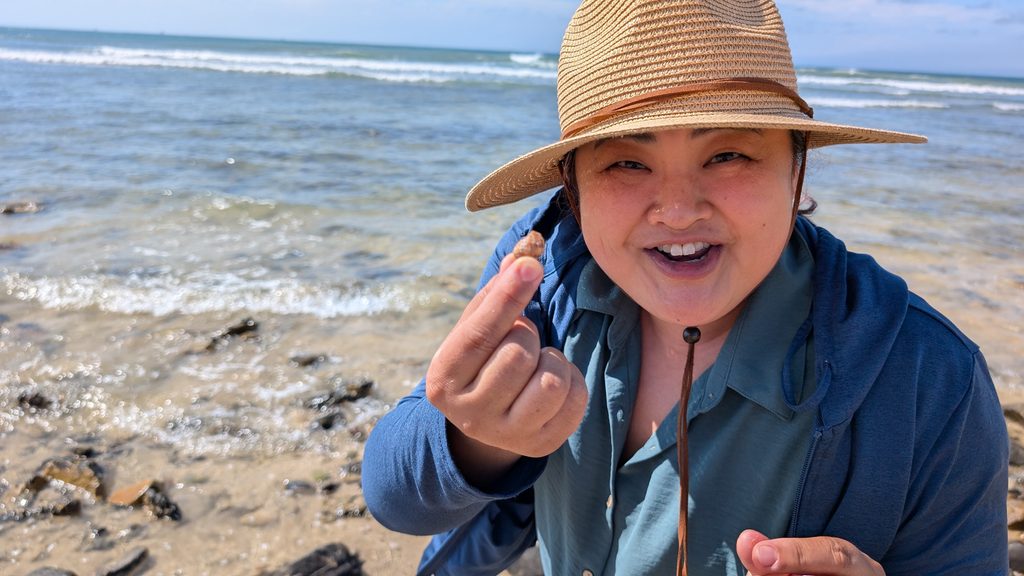
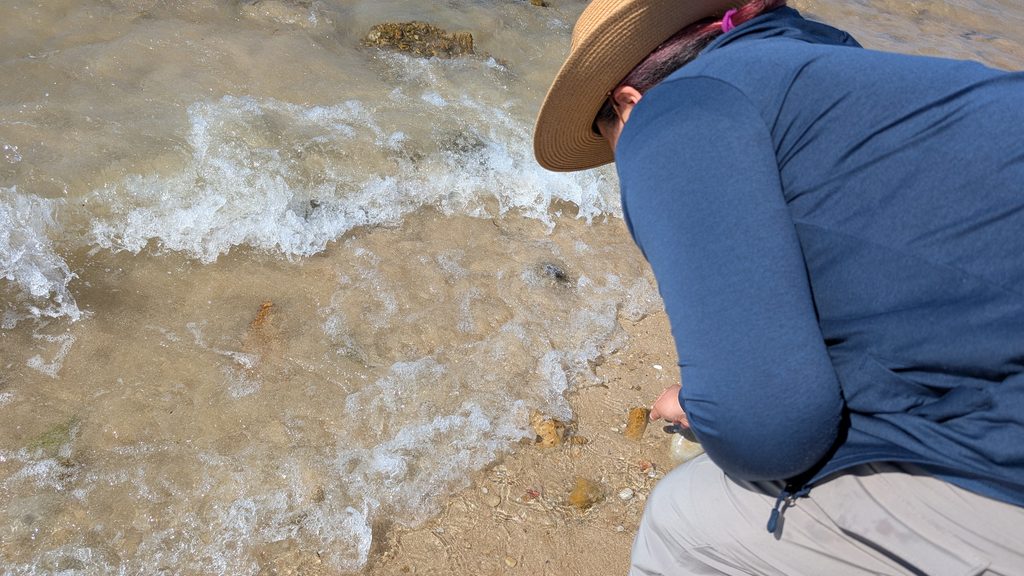
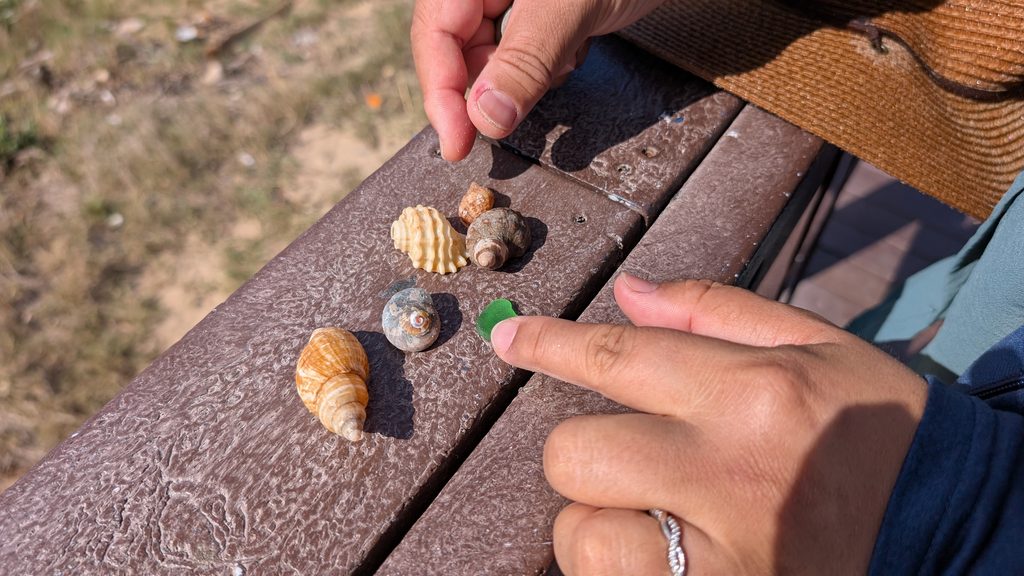
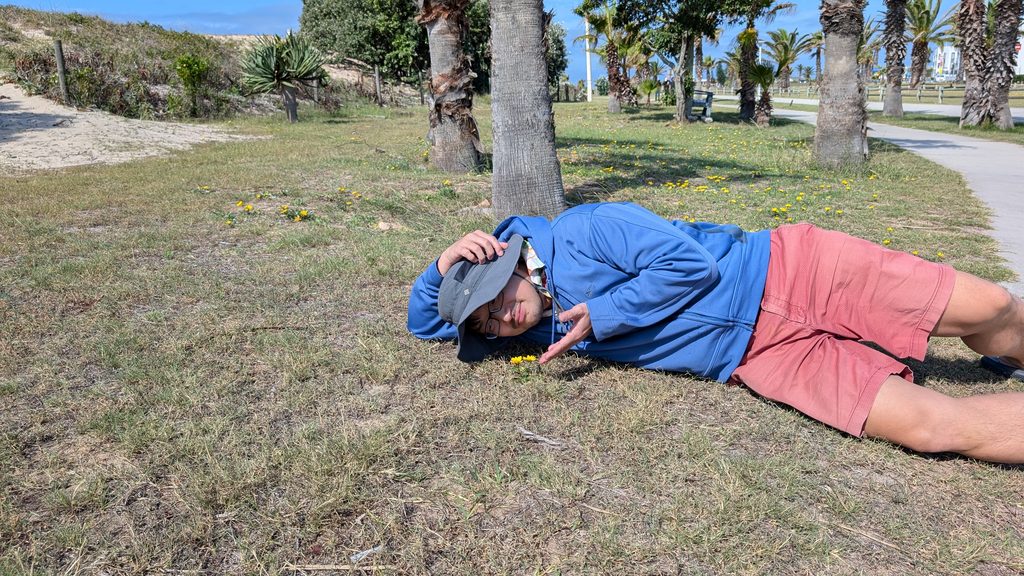
We originally planned to visit more scenic, potentially secluded beaches south of Port Elizabeth (like “Secret Beach”), but our Addo guide had warned us off, saying access through the nature reserve could be difficult and time-consuming. So, we opted for Kings Beach, right near the main commercial area. Christine collected some rocks, we walked around.
Then came airport drama. We’d received alerts about a global outage of some airport management software, causing manual check-ins and potential delays. Airlines advised arriving three hours early. We were skeptical about this impacting tiny PLZ airport significantly, but we headed there early anyway. Sure enough, they confirmed the issue and told us check-in wouldn’t even start until two hours before departure. We waited, eventually checked in, went through security, hung out, and finally took off for Cape Town.
An oddity on the flight: for about 80% of the journey, I had cellphone signal in the air without using Wi-Fi! Bizarre.
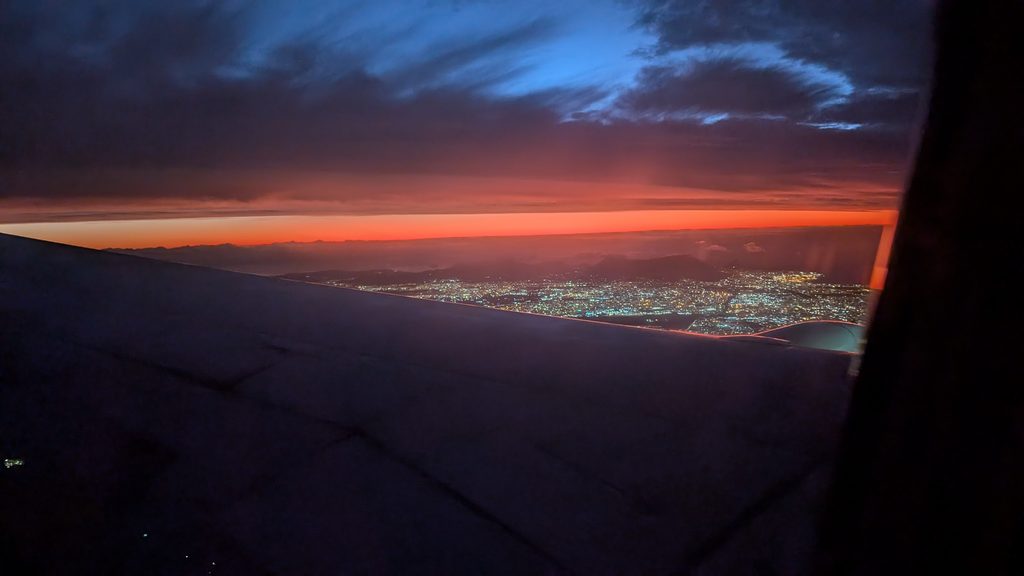
We landed in Cape Town around 9 PM. The approach offered a fantastic sunset. Taking an Uber to our hotel, we were immediately struck by the sight of Table Mountain to our left. We knew about it, of course, but hadn’t grasped its sheer scale and proximity to the city. At night, it was dramatically lit by spotlights from its base, making it look almost like a floating “ghost mountain”.
The final leg of our trip was 4 nights in Cape Town.
Leave a Reply